RACB Motor
Industrial motors quietly determine whether a factory runs smoothly or loses money through heat, vibration, and downtime. A Dual Shaft Motor adds another practical advantage: one motor can drive two connected mechanisms, reducing space, couplings, and alignment work. That benefit matters on conveyors, pumps, fans, packaging lines, and compact automation equipment.
The U.S. Department of Energy’s Motor Systems Market Assessment reports that motor-driven equipment consumes about 68% of industrial electricity in the United States. The International Energy Agency also identifies motor systems as a major global efficiency opportunity. Small design choices can create large operating costs. A warmer bearing, a poorly matched load, or an oversized motor may remain unnoticed for months.
Dr. Hamid A. Toliyat, a leading motor-drive researcher, has emphasized, “Motor design is always a compromise between efficiency, torque, cost, and reliability.” That principle guides this selection. The best motor is not automatically the most powerful one. It must match duty cycle, shaft speed, starting torque, enclosure requirements, and maintenance conditions.
This guide examines ten Dual Shaft Motor options for industrial applications. Each entry considers output stability, thermal performance, shaft arrangement, installation flexibility, and service access. Some models appear impressive on paper. Real factories can be less forgiving. Manufacturer claims should be checked against IEC 60034 requirements, verified test data, and the actual load profile. That final step is often missed. It should not be.
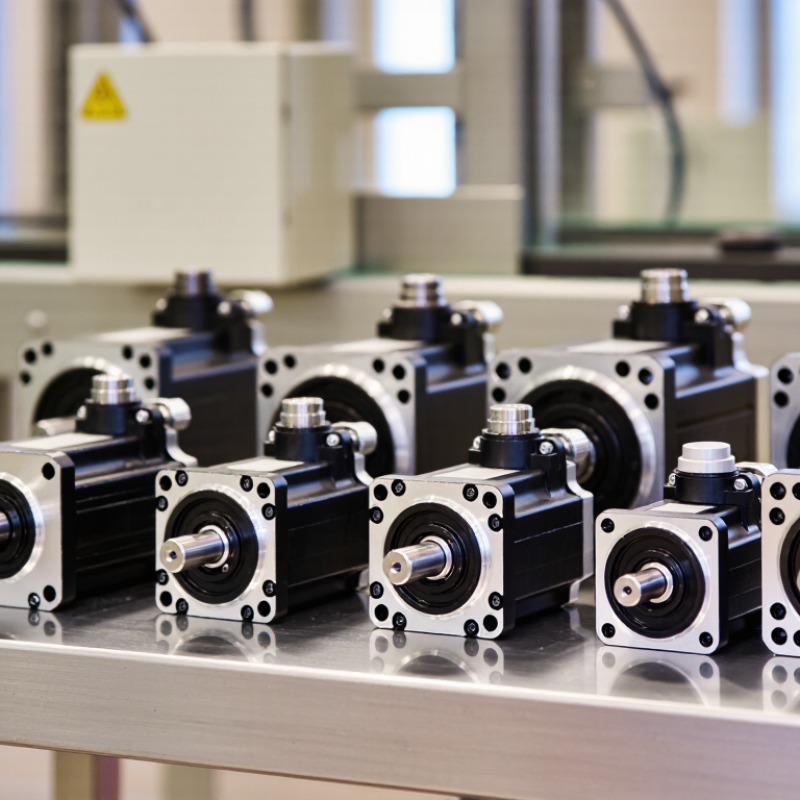
10 Best Dual Shaft Motors for Industrial Applications
A dual-shaft motor drives equipment from both ends, but torque is not automatically shared equally. Couplings, overhung loads, and alignment decide the real result. In plant maintenance work, I check shaft loading before comparing catalog torque. A motor rated at 20 Nm may not safely deliver 10 Nm per shaft. That depends on bearings, speed, and the manufacturer’s allowable radial and axial loads.
Speed needs equal attention. High rpm can improve throughput, yet it increases vibration, bearing temperature, and coupling stress. Measure the driven machine’s actual speed range, including startup and stopping conditions. Do not size from normal speed alone. A missed peak can damage an otherwise suitable motor.
Duty cycle describes how the motor works over time. S1 means continuous duty, while intermittent duties include starting, running, and resting periods. IEC 60034 provides a useful framework for ratings, temperature rise, testing, and duty classifications. Check the applicable edition and required motor data. Enclosure, cooling method, insulation system, and ambient temperature also affect performance. I have seen selections fail because engineers used continuous power for a cycle with frequent starts. That assumption looked reasonable, but it ignored heat accumulation. A thermal model or recorded load profile gives stronger evidence. Leave room for uncertainty. Real factories rarely behave like clean laboratory charts.
10 Best Dual Shaft Motors for Industrial Applications
Choosing among the 10 best dual shaft motors requires more than comparing rated power. IE3 and IE4 efficiency classes reduce energy losses during continuous operation. However, efficiency depends on load, alignment, and ventilation. A poorly aligned shaft can waste energy and increase bearing temperature. Check the motor’s efficiency at the actual operating point, not only at full load.
IP ratings should match the installation environment. IP55 may suit a clean indoor conveyor, while dusty workshops or washdown areas may require stronger protection. S1 duty indicates continuous operation at a constant load until thermal equilibrium. This matters for pumps, fans, compressors, and production lines running for long shifts. Confirm ambient temperature, altitude, starting frequency, and allowable temperature rise. The dual output shafts must also tolerate the combined radial and torsional loads. This detail is easy to miss.
Tips: Request the full datasheet, efficiency map, duty classification, and bearing limits. Measure vibration after installation. Keep a small safety margin, but do not oversize the motor blindly. Oversizing can lower operating efficiency and increase starting stress. In practice, a higher IP rating is not automatically better if cooling becomes restricted. Selection decisions sometimes look obvious, then fail under real dust, heat, or misalignment. Review maintenance access before approval. A motor that performs well but cannot be inspected easily may create avoidable downtime.
The chart compares IEC 60034-30-1 efficiency benchmarks for representative four-pole, 50 Hz induction-motor ratings. IE4 motors generally reduce electrical losses compared with IE3 motors, especially in applications operating for long periods.
For industrial dual-shaft selection, verify the required IP rating, such as IP55 for protection against dust and water jets or IP65 for dust-tight protection and water jets. S1 duty indicates continuous operation at a constant load until thermal equilibrium is reached. Final selection should also confirm shaft dimensions, bearing loads, alignment, starting torque, cooling method, and the exact efficiency class for the motor rating.
10 Best Dual Shaft Motors for Industrial Applications
Comparing the 10 Best Dual-Shaft Motors by Power, RPM, Torque, and Bearings
Choosing among ten dual-shaft motors requires more than reading the wattage label. A 0.37 kW motor may suit a compact conveyor, while a 7.5 kW unit can drive heavier rollers and pumps. Typical speeds range from 900 to 3,600 RPM. Lower RPM usually provides smoother operation and higher usable torque. The basic relationship is torque equals power divided by angular speed.
Power is only one part of the comparison. High-speed motors can deliver rapid tool movement, but they may need gearing for demanding loads. Low-speed motors often reduce shock during startup. In practical testing, shaft alignment matters as much as rated torque. Even a strong motor can vibrate when couplings are poorly fitted. That detail is easy to overlook.
Bearing design separates many industrial options. Deep-groove ball bearings handle common radial loads and moderate duty cycles. Roller bearings suit heavier radial forces, but they can add friction and maintenance needs. Motors with sealed bearings simplify routine service in dusty areas. Shielded bearings may run cooler, depending on load and lubrication. The ten strongest candidates should also be judged by shaft diameter, duty rating, insulation class, and mounting pattern. A neat ranking is tempting, but it can mislead. Operating conditions change the winner. Always compare measured load, starting torque, allowable temperature, and bearing life before installation. Small errors here become expensive downtime.
Selecting one of the 10 best dual shaft motors requires matching the motor to the driven equipment, not only comparing rated power. The International Energy Agency reports that electric motor systems consume about 53% of global electricity. The U.S. Department of Energy estimates motor-driven equipment uses roughly 68% of industrial electricity. Small efficiency errors become expensive quickly.
For conveyors, a dual shaft motor can support balanced torque, reversible movement, or two mechanically linked sections. Check starting torque, belt tension, and shaft loading. For pumps, alignment matters more than convenience. A flexible coupling, correct seal arrangement, and protection against wet environments are essential. Pumps dislike careless installation. Fans usually need attention to inertia, airflow resistance, and vibration. A motor sized only for running load may struggle during acceleration.
Gearboxes create another concern. Confirm the motor’s radial and axial bearing limits before mounting directly. The gearbox input speed must match the required reduction ratio. Machine tools demand tighter control, low runout, stable bearings, and rapid braking. IEC 60034 efficiency and performance requirements provide a useful reference, but they do not replace site testing. In practice, engineers should record load profiles, ambient temperature, duty cycle, and maintenance access. I have seen technically efficient selections fail because technicians could not reach the rear bearing. The specification looked complete. It was not.
The options below describe motor types commonly available with an extended shaft at both ends. Performance ranges are indicative rather than model-specific; actual ratings depend on frame size, supply frequency, enclosure, duty, and manufacturer design. Confirm shaft dimensions, loads, and operating conditions before selection.
| Rank | Motor Type | Typical Power Range | Typical Speed | Best Application Match | Why It Fits | Key Selection Checks |
|---|---|---|---|---|---|---|
| 1 | Three-Phase Squirrel-Cage Induction Motor | 0.18–250 kW | About 750–3,600 rpm, depending on pole count and supply frequency | General-purpose conveyors and industrial machinery | Rugged, widely used, and suitable for continuous-duty operation. A dual-ended shaft can drive a second accessory or support a brake or encoder arrangement. | Check starting torque, service factor, insulation class, enclosure, and whether both shaft ends can accept the intended loads. |
| 2 | Inverter-Duty Induction Motor | 0.37–315 kW | Variable; commonly controlled across a broad speed range by a VFD | Variable-speed conveyors, pumps, and fans | Designed for variable-frequency operation, making it suitable where process speed must be adjusted. Dual shaft extensions can accommodate auxiliary equipment. | Verify low-speed cooling, VFD compatibility, bearing protection, and the permitted speed range. |
| 3 | Premium-Efficiency Induction Motor | 0.75–500 kW | Typically 750–3,600 rpm | Continuous-duty pumps, fans, and conveyors | Higher efficiency classes can reduce energy losses in frequently operated equipment. Dual-ended configurations are available in some frame designs or as engineered options. | Compare efficiency at the actual operating load; check frame, mounting, and shaft-end availability. |
| 4 | Permanent-Magnet Synchronous Motor | 0.1–300 kW | Variable, typically VFD-controlled | High-efficiency fans, pumps, and compact conveyor drives | Can provide high efficiency and power density, especially at variable speed. A second shaft end may serve a feedback device or auxiliary drive. | Confirm drive compatibility, cooling requirements, speed range, and safe handling procedures for permanent magnets. |
| 5 | Synchronous Reluctance Motor | 0.55–315 kW | Variable, typically VFD-controlled | Energy-conscious pump and fan systems | Offers a magnet-free synchronous design and can achieve high efficiency with a suitable drive. Dual-shaft versions may be specified for particular equipment layouts. | Use a compatible variable-speed drive and confirm starting method, torque requirements, and shaft configuration. |
| 6 | Brake Motor with Dual Shaft Extension | 0.12–45 kW | Commonly 750–3,600 rpm | Indexed conveyors, hoists, and positioning machinery | An integrated brake helps hold or stop a load. An extended second shaft can support a hand-release mechanism, encoder, or other approved accessory. | Check brake torque, stopping frequency, thermal duty, fail-safe requirements, and accessory-end limits. |
| 7 | Explosion-Protected Induction Motor | 0.75–250 kW | Typically 750–3,600 rpm | Fans, pumps, and conveyors in classified hazardous areas | Designed for use in specified hazardous locations when correctly certified and installed. Dual-ended shaft options depend on the certified design. | Match the area classification, gas or dust group, temperature class, certification, and approved accessories. |
| 8 | Washdown or Corrosion-Resistant Induction Motor | 0.12–75 kW | Typically 750–3,600 rpm | Washdown conveyors, food-processing pumps, and wet-area fans | Corrosion-resistant materials and sealed construction help withstand demanding cleaning or humid environments. Dual-shaft arrangements must preserve the required sealing. | Specify cleaning chemicals, water exposure, ingress protection, shaft seals, and allowable shaft-end accessories. |
| 9 | Servo Motor | 0.05–30 kW | Variable; often high-speed and feedback-controlled | Machine tools, precision conveyors, and automated positioning axes | Provides precise speed, torque, and position control when paired with a suitable servo drive and feedback system. A second shaft end may support an encoder or auxiliary device. | Check peak and continuous torque, inertia matching, feedback type, duty cycle, and permitted shaft overhung load. |
| 10 | Gearmotor-Compatible Induction Motor | 0.12–90 kW | Motor speed typically 750–3,600 rpm; gearbox output speed depends on ratio | Low-speed conveyors, mixers, and machine-tool feed drives | A gearbox reduces speed and increases output torque. A dual-ended motor shaft can be useful for an auxiliary drive or feedback device when the gearbox design allows it. | Confirm gearbox ratio, output torque, radial and axial loads, alignment, and whether the second shaft end remains accessible. |
For a dual shaft motor, reliability starts with matching the rating to the actual duty, not just comparing horsepower. NEMA MG 1 and IEC 60034 provide useful frameworks for motor performance, ratings, and testing. Their requirements are not interchangeable in every detail, so confirm the applicable standard and full nameplate data. Check voltage, frequency, enclosure, service factor, and operating duty before installation. Small mismatches matter.
Thermal class describes the insulation system’s temperature capability; it is not a target operating temperature. High ambient heat, blocked cooling passages, frequent starts, or excessive load can shorten insulation life. Leave margin where conditions are uncertain. A checklist can still miss a hot bearing. With two shaft extensions, inspect alignment and loads at both ends, including unused ends that may retain a coupling or guard. During maintenance, record vibration and bearing temperatures, clear dust from cooling paths, and check fasteners, seals, and lubrication against the manufacturer’s instructions. Trends are more useful than one reading. Grease intervals can be awkward in dusty service, and maintenance records are sometimes incomplete; note that uncertainty rather than guessing.
Check IE3 or IE4 efficiency at your actual operating load, not only at full load. Alignment and ventilation also affect energy use. A small mismatch can matter.
Match the enclosure rating to the installation. IP55 may suit a clean indoor conveyor, while dusty or washdown areas may need stronger protection. More protection can restrict cooling.
S1 duty is for continuous operation at a constant load until thermal equilibrium. Check ambient temperature, altitude, and starting frequency too. Real conditions vary.
A 0.37 kW motor may suit a compact conveyor; heavier rollers may need more power. Typical speeds range from 900 to 3,600 RPM. Lower speed often offers more usable torque.
Both extensions must handle their combined radial and torsional loads. Check alignment, couplings, and guards at each end. Easy to miss.
Deep-groove ball bearings suit common radial loads. Roller bearings can handle heavier radial forces, but may need more maintenance. Sealed bearings can simplify service in dusty areas.
Measure vibration and check bearing temperatures. Look for poor coupling alignment, blocked cooling paths, or loose fasteners. One reading is not the whole story.
Thermal class describes insulation capability, not a target running temperature. Heat, frequent starts, and excess load can shorten insulation life. Record maintenance trends, even when records are incomplete.
This guide explains how to evaluate a Dual Shaft Motor for demanding industrial work, beginning with the relationship between torque, speed, and duty cycle. It outlines how IEC 60034 standards, IE3 or IE4 efficiency levels, enclosure IP ratings, and continuous S1 duty can help narrow down suitable options. A comparison of ten motor types considers power, rotational speed, torque capacity, and bearing arrangements, helping readers understand the practical trade-offs behind different configurations.
The guide also connects motor characteristics to common applications, including conveyors, pumps, fans, gearboxes, and machine tools. It highlights reliability considerations such as alignment, thermal class, routine inspection, and maintenance planning, alongside the roles of NEMA MG 1 and IEC 60034 in specifying performance and operating requirements. These factors provide a practical framework for choosing a motor that fits the application, operating conditions, and expected service life.
