RACB Motor RACB Motor

What Is the Best Low Voltage Motor Manufacturer in China?

Time:2026-09-10 Author:Sienna
0%

Choosing the best Low Voltage Motor manufacturer in China requires more than comparing catalog prices. Motor systems consume over 40% of global electricity, according to the International Energy Agency’s energy-efficiency research. Even small efficiency differences can therefore affect a factory’s yearly operating costs. A motor running beside a dusty production line may work continuously for thousands of hours. Its real value appears in energy bills, downtime records, and maintenance reports.

This article examines Chinese manufacturers through practical and technical evidence. Key criteria include IEC 60034-30-1 efficiency classes, verified IE3 or IE4 performance, insulation quality, thermal protection, bearing reliability, and enclosure ratings such as IP55. The U.S. Department of Energy’s Motor Systems Market Assessment also highlights the importance of evaluating complete motor systems, not just nameplate efficiency. That distinction matters. An efficient motor can still underperform when poorly selected, overloaded, or incorrectly controlled.

The strongest manufacturers usually demonstrate ISO 9001 processes, traceable testing, export experience, and responsive after-sales support. Factory capacity helps, but it does not prove consistent quality. Independent test certificates, sample inspections, and clear warranty terms provide stronger evidence. Some suppliers communicate impressively yet offer limited technical documentation. That is a warning sign. The final ranking should therefore consider application experience, delivery consistency, customization capability, and lifecycle cost. There may be no universal winner. A reliable manufacturer for pumps may not suit cranes, compressors, or harsh chemical environments. Careful comparison remains necessary.
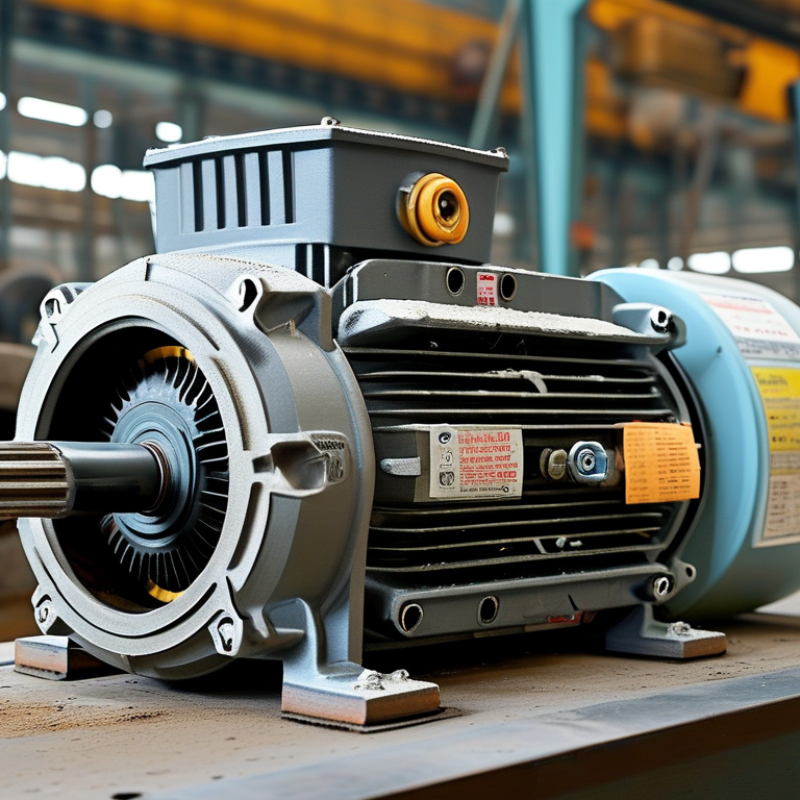
What Is the Best Low Voltage Motor Manufacturer in China?

Defining Low-Voltage Motors: IEC Systems Rated Below 1,000 V AC

A low-voltage motor is generally an IEC rotating machine rated below 1,000 V AC. This range includes common 230 V, 400 V, and 690 V industrial systems. IEC 60034 standards address motor performance, ratings, testing, and efficiency. Voltage alone is not enough. Engineers must also check frequency, duty cycle, insulation, enclosure protection, cooling, and starting current.

The energy impact is substantial. The International Energy Agency has reported that electric motor systems consume roughly half of global electricity, with widely cited estimates near 46%. The U.S. Department of Energy also identifies motor systems as a major industrial energy-saving opportunity. A 400 V motor may look ordinary on a factory floor, yet poor loading, oversized capacity, or restricted airflow can increase operating costs every hour.

Selecting a Chinese low-voltage motor manufacturer therefore requires practical evidence, not attractive specifications. Ask for IEC test reports, efficiency data, thermal-rise results, and traceable quality records. Check whether the manufacturer validates motors under real duty conditions, including frequent starts, dust, moisture, and variable-speed operation. Certification helps.

Field experience still matters. A polished datasheet cannot reveal every bearing failure or winding weakness. Buyers should review sample units, inspect production controls, and compare measured performance against declared values. Sometimes, the cheapest motor is only cheap at purchase.

Comparing Chinese Suppliers by IEC 60034-30-1 IE3 and IE4 Efficiency Classes

What Is the Best Low Voltage Motor Manufacturer in China?

The best supplier is not simply the one offering the lowest IE3 price. IEC 60034-30-1 defines IE3 and IE4 efficiency classes for line-operated AC motors. A reliable Chinese manufacturer should provide tested efficiency data, clear tolerances, and complete motor nameplate information. During supplier evaluations, I check rated output, voltage, frequency, pole count, and operating temperature. Small details matter.

IE4 motors usually reduce energy losses more effectively than IE3 models, especially in pumps, fans, and compressors running for long hours. However, their purchase price, starting behavior, control requirements, and replacement parts deserve careful review. A supplier with strong engineering experience should explain these differences without using vague marketing claims. Ask for test reports based on recognized methods, production records, and evidence of routine quality inspections. Numbers can mislead.

Factory capability also matters. Inspect winding consistency, rotor balancing, bearing installation, insulation testing, and final-load testing. A manufacturer serving export markets should understand documentation, traceability, and regional electrical requirements. My own early comparisons focused too heavily on efficiency percentages. That was a mistake. A slightly higher IE4 rating may not repay its cost in a lightly used machine. For continuous-duty equipment, however, verified IE4 performance can support lower operating costs. Compare measured results, not promises.

Testing 0.12–1,000 kW Motors Against China’s 2021 GB/T 18613 Limits

What Is the Best Low Voltage Motor Manufacturer in China?

Testing 0.12–1,000 kW Motors Against China’s 2021 GB/T 18613 Limits

Selecting a low voltage motor manufacturer requires more than comparing catalog efficiency figures. GB/T 18613-2021 sets efficiency limits across different power ranges, pole numbers, and operating conditions. A 0.12 kW motor cannot be judged against a 1,000 kW motor using one simple percentage. The test must match the motor’s rated voltage, frequency, speed, and load.

A reliable evaluation begins with factory test records and independent laboratory verification. Inspectors should check winding resistance, no-load current, temperature rise, and efficiency at the rated operating point. Load testing should follow a controlled procedure, with calibrated torque and speed instruments. Small motors deserve close attention because measurement uncertainty can significantly affect their results. Large motors need stable loading equipment and careful thermal monitoring.

Look beyond the certificate.

A manufacturer should provide traceable reports, clear tolerance information, and consistent nameplate data. Production samples should be tested, not only prototype units. Material control also matters; copper content, lamination quality, bearing fit, and cooling design influence real performance. A spreadsheet may look convincing, yet it cannot reveal vibration from a poorly balanced rotor. One weakness remains: laboratory results may not represent every production batch. Repeated sampling and on-site audits offer stronger evidence. The best choice is therefore the supplier that demonstrates repeatable compliance across the 0.12–1,000 kW range, not merely the highest advertised efficiency.

Auditing 50 Hz, 2–8 Pole Designs with IP55 and Class F Insulation

What Is the Best Low Voltage Motor Manufacturer in China?

A credible audit begins with the duty point, not the catalogue cover. The International Energy Agency’s Energy Efficiency 2023 report identifies motor-driven systems as major global electricity consumers, approaching half of total demand. That makes small efficiency losses expensive. For 50 Hz motors, a 2-pole design reaches about 3,000 rpm synchronously, while 4-, 6-, and 8-pole designs reach approximately 1,500, 1,000, and 750 rpm. Actual speed falls slightly under load because of slip. Review efficiency reports under IEC 60034-2-1, not only rated output.

IP55 should mean protection against dust ingress and water jets, but audit evidence matters more than a printed code. Inspect enclosure joints, cable glands, shaft seals, and drainage arrangements. Class F insulation permits a 155°C thermal class, yet a conservative design should maintain a lower winding temperature. This improves service life. Measure winding resistance, insulation resistance, surge performance, vibration, noise, and temperature rise across representative samples. One promising factory sample proves little.

The strongest Chinese manufacturer should provide traceable test records, calibrated instruments, material certificates, and repeatable production results. Check 2–8 pole ranges separately; a supplier may control four-pole motors well but struggle with high-speed two-pole rotors. Ask for load-test curves at 50 Hz, starting current, locked-rotor torque, and efficiency at 25%, 50%, 75%, and 100% load. The U.S. Department of Energy reports that motor systems can represent roughly 70% of industrial electricity use. Procurement teams should therefore audit lifecycle energy, not purchase price alone. No audit is perfect. That is precisely why independent verification remains necessary.

What Is the Best Low Voltage Motor Manufacturer in China? - Auditing 50 Hz, 2–8 Pole Designs with IP55 and Class F Insulation
Audit Dimension 2-Pole Design 4-Pole Design 6-Pole Design 8-Pole Design Audit Benchmark
Supply System Three-phase, 380–415 V, 50 Hz Three-phase, 380–415 V, 50 Hz Three-phase, 380–415 V, 50 Hz Three-phase, 380–415 V, 50 Hz Pass if the nameplate voltage and frequency match the purchase specification.
Synchronous Speed at 50 Hz 3,000 r/min 1,500 r/min 1,000 r/min 750 r/min Calculated from n = 120f/p, where f is frequency and p is the number of poles.
Typical Rated-Speed Range 2,850–2,985 r/min 1,425–1,490 r/min 950–990 r/min 710–745 r/min Actual speed is lower than synchronous speed because of normal induction-motor slip.
Common Industrial Power Range 0.75–315 kW 0.75–355 kW 1.1–315 kW 2.2–250 kW Range depends on frame size, cooling capability, duty, and application torque.
Efficiency Classification IE3 or IE4 options IE3 or IE4 options IE3 or IE4 options IE3 or IE4 options Verify the exact efficiency value against IEC 60034-30-1 for the rated power and pole count.
Indicative Full-Load Efficiency Approximately 84–96% Approximately 85–97% Approximately 84–96% Approximately 82–95% Indicative engineering ranges only; certified test reports should be used for procurement decisions.
Power Factor at Full Load Approximately 0.82–0.92 Approximately 0.80–0.91 Approximately 0.75–0.89 Approximately 0.70–0.86 Power factor varies with output rating, magnetic design, and operating load.
Ingress Protection IP55 IP55 IP55 IP55 Pass when the enclosure is tested and marked according to IEC 60034-5.
Cooling Method IC411, totally enclosed fan-cooled IC411, totally enclosed fan-cooled IC411, totally enclosed fan-cooled IC411, totally enclosed fan-cooled Confirm fan direction, airflow, noise level, and suitability for variable-speed operation.
Insulation System Class F Class F Class F Class F Pass if insulation resistance and dielectric-strength tests comply with the applicable IEC requirements.
Thermal Design Target Class F insulation with conservative temperature-rise design preferred Class F insulation with conservative temperature-rise design preferred Class F insulation with conservative temperature-rise design preferred Class F insulation with conservative temperature-rise design preferred Request the temperature-rise limit, ambient-temperature rating, and altitude derating data.
Typical Starting-Torque Ratio Approximately 1.8–2.8 × rated torque Approximately 1.8–2.8 × rated torque Approximately 1.6–2.6 × rated torque Approximately 1.5–2.4 × rated torque Application-specific; pump, fan, compressor, and conveyor duties require different torque margins.
Bearings and Lubrication Sealed or regreasable bearings, depending on frame size Sealed or regreasable bearings, depending on frame size Regreasable bearings common at higher ratings Regreasable bearings commonly specified for higher loads Verify bearing life, grease type, relubrication interval, and shaft-load limits.
Routine Factory Tests Winding resistance, no-load current, high-voltage, and vibration checks Winding resistance, no-load current, high-voltage, and vibration checks Winding resistance, no-load current, high-voltage, and vibration checks Winding resistance, no-load current, high-voltage, and vibration checks Pass when test records are traceable to the motor serial number.
Documentation Required for Audit Nameplate, datasheet, test report, dimensional drawing Nameplate, datasheet, test report, dimensional drawing Nameplate, datasheet, test report, dimensional drawing Nameplate, datasheet, test report, dimensional drawing Include efficiency, power factor, current, speed, noise, vibration, and warranty information.
Overall Technical Screening Suitable for high-speed industrial drives after application review Preferred for general-purpose pumps, fans, compressors, and conveyors Suitable for lower-speed, higher-torque applications Application Review required for starting torque and thermal performance Final selection should be based on certified performance data, load profile, installation conditions, and service support.
Technical basis: The audit criteria reference common requirements and terminology from IEC 60034-1, IEC 60034-5, IEC 60034-6, and IEC 60034-30-1. Numerical performance ranges are indicative benchmarks for low-voltage squirrel-cage induction motors and are not a substitute for a manufacturer’s certified test report.

Ranking Manufacturers Through ISO 9001, IEC Reports, and Export Data

What Is the Best Low Voltage Motor Manufacturer in China?

The “best” low voltage motor manufacturer should be ranked through evidence, not catalog claims. The ISO Survey 2022 recorded more than one million ISO 9001 certificates in China. Certification alone proves little, however. Buyers should verify the certificate scope, audit date, factory address, and corrective-action records. A valid certificate must cover motor design, production, testing, or all three.

IEC evidence offers a sharper filter. IEC 60034-1 defines essential requirements for rotating electrical machines, while IEC 60034-30-1 classifies motor efficiency from IE1 to IE4. Request recent third-party test reports, temperature-rise results, vibration readings, and efficiency curves at partial load. Factory experience matters here. A motor that performs well at 50 Hz may behave differently under frequent starts, dusty workshops, or unstable voltage.

Export data provides another useful comparison. UN Comtrade records China’s 2023 exports under HS 8501 at roughly US$14 billion, covering electric motors and generators. High export volume suggests production depth, but it does not confirm reliability. Compare destination markets, repeat shipments, warranty claims, and delivery consistency. I would score each manufacturer across ISO validity, IEC test quality, export continuity, and traceable after-sales records. My ranking would remain provisional. Reports can be incomplete, translated poorly, or influenced by sampling limits. That weakness deserves attention.

FAQS

: What is a low-voltage motor?

: It is generally an IEC rotating machine rated below 1,000 V AC. Common systems include 230 V, 400 V, and 690 V. Voltage alone does not define suitability.

Which factors should engineers check before selecting a motor?

Check frequency, duty cycle, insulation, enclosure protection, cooling, and starting current. Also confirm the rated load and operating environment. Small details matter.

Why does motor efficiency matter?

Motor systems consume a large share of global electricity. Poor loading can increase energy costs every operating hour. Restricted airflow may also raise temperature and shorten service life.

How should buyers evaluate a motor manufacturer?

Request IEC test reports, efficiency data, thermal-rise results, and traceable quality records. Ask how production motors are tested. A polished catalog is not enough.

What does GB/T 18613-2021 require manufacturers to consider?

Efficiency limits vary by power range, pole number, and operating condition. A 0.12 kW motor cannot be judged like a 1,000 kW motor. The comparison must match actual ratings.

Which tests provide useful motor performance evidence?

Check winding resistance, no-load current, temperature rise, and rated-point efficiency. Use calibrated torque and speed instruments during load testing. Testing must be controlled.

Why do small and large motors need different testing attention?

Small motors can be strongly affected by measurement uncertainty. Large motors require stable loading equipment and careful thermal monitoring. Both sizes need reliable records.

Can laboratory results guarantee every production motor?

No. Laboratory results may not represent every production batch. Repeated sampling and on-site audits provide stronger evidence. This limitation deserves honest attention.

Which physical details can reveal hidden motor problems?

Inspect copper content, laminations, bearing fit, cooling passages, and rotor balance. A poorly balanced rotor may create noticeable vibration. Datasheets rarely show everything.

Conclusion

Choosing the best Low Voltage Motor manufacturer in China requires more than comparing prices or production capacity. A reliable evaluation should begin by confirming that the motors are designed for IEC systems below 1,000 V AC and comply with relevant IEC 60034-30-1 efficiency classes, especially IE3 and IE4. Performance should also be checked across the 0.12–1,000 kW range against China’s GB/T 18613 energy-efficiency limits introduced in 2021.

A thorough comparison should examine 50 Hz, 2–8 pole configurations, IP55 protection, Class F insulation, operating stability, and manufacturing consistency. Independent test reports, documented quality procedures, ISO 9001 certification, and verifiable export experience can provide stronger evidence than promotional claims alone. By combining technical compliance, efficiency data, durability testing, production controls, and after-sales capability, buyers can identify a manufacturer that delivers dependable motors for industrial applications while supporting long-term energy savings and operational reliability.

Sienna

Sienna

Sienna is a skilled marketing professional with a deep expertise in our company’s core products and services. With a passion for innovation and detail, she plays a pivotal role in crafting insightful blog posts that not only highlight the unique features of our offerings but also provide valuable......