RACB Motor
Choosing the best Torque Control Motor in 2026 is not just a matter of comparing rated torque. The right choice depends on load changes, speed range, response time, duty cycle, and the control system already on the machine. A motor that performs well on a steady conveyor may struggle with a winding line that accelerates and brakes repeatedly. Small differences matter.
The International Energy Agency’s 2011 report, Energy-Efficiency Policy Opportunities for Electric Motor-Driven Systems, estimated that motor-driven systems used about 46% of global electricity. That figure is a historical benchmark, not a 2026 measurement. It still underlines why efficiency and control deserve attention when selecting industrial motors. Buyers should also examine thermal limits, feedback requirements, drive compatibility, maintenance access, and performance at low speeds—not just peak torque.
There is no universal winner. Direct-drive torque motors can suit applications that need smooth, precise motion without a gearbox; servo systems may fit jobs requiring fast, programmable response. Yet product claims do not replace application data. A practical comparison should use the actual load profile, operating hours, and accuracy needs. One point is easy to miss: a more capable motor can be the wrong purchase if the machine cannot use its features. The best choice is specific. And sometimes, the available data is incomplete.
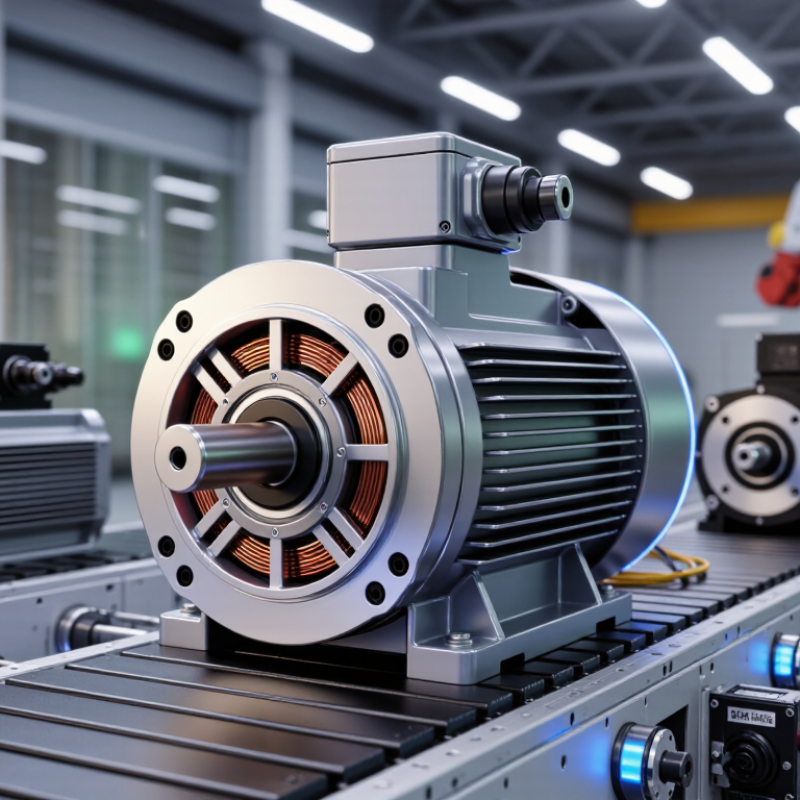
A torque-control motor is usually a motor paired with a drive that regulates turning force, rather than a special motor type. Torque, measured in newton-metres, is the force that turns a shaft. The drive changes motor current to raise or lower torque. In permanent-magnet motors, torque-producing current closely tracks output torque within the normal operating range. An encoder or other sensor can report speed and position, helping the controller respond as a load changes. Not magic.
The scale matters. The International Energy Agency’s 2011 report, Energy-Efficiency Policy Opportunities for Electric Motor-Driven Systems, estimated that these systems use about 45% of global electricity. The U.S. Department of Energy’s motor systems sourcebook reports that motors use roughly 70% of industrial electricity in the United States. These broad figures explain why efficient control matters, but they do not predict one machine’s performance. On a conveyor, for example, a loaded belt needs more turning force at startup than during steady travel.
In 2026, the best setup depends on the task, not a single “best” control method. Field-oriented control can provide smooth torque at low speeds; direct torque control can offer rapid response, depending on motor and drive tuning. Check required starting torque, speed range, feedback needs, and heat limits. A model may look perfect on paper; a loose coupling or poorly aligned encoder can still cause rough operation.
Which Motor Types Offer Torque Control in 2026?
Torque control is not a motor feature alone. The drive, sensors, and tuning matter just as much. Permanent-magnet synchronous and brushless DC motors commonly use field-oriented control to regulate torque through phase current. With an encoder, a servo system can hold or change torque accurately, even as speed shifts. That distinction matters. AC induction motors can also provide controlled torque through vector control or direct torque control, though results depend on the drive and setup.
Brushed DC motors offer a straightforward option: armature current closely tracks torque under suitable conditions. Stepper motors can regulate current too, but their available torque falls as speed rises; they may lose position under sudden load changes. Direct-drive torque motors suit low-speed applications that need substantial torque without a gearbox. For a real choice, check the required torque across the full speed range, not just the peak figure on a datasheet. A conveyor starting with a heavy load needs different behavior from a small indexing table. I would also question any selection made without testing heat, feedback quality, and load changes. Even a well-rated motor can disappoint when its drive is poorly tuned.
| Motor type | How torque is controlled | Torque-control characteristics | Key advantages | Main considerations | Common applications |
|---|---|---|---|---|---|
| Permanent-magnet synchronous motor (PMSM) | A compatible inverter uses field-oriented control (FOC) to regulate current, especially the torque-producing q-axis current. | Responsive, precise torque control is possible across a wide operating range. Available torque depends on motor design, current limits, speed, and thermal conditions. | High efficiency and power density; well suited to dynamic, closed-loop control. | Requires a suitable drive and usually rotor-position feedback or a capable sensorless control method. Field weakening and current limits affect high-speed torque. | Robotics, machine tools, electric vehicles, and precision automation. |
| Brushless DC motor (BLDC) | An electronic drive regulates phase current; sinusoidal FOC or other current-control methods can provide smooth torque regulation. | Torque is closely related to current within the motor’s operating limits. Smoothness depends on commutation method, feedback, and motor design. | No mechanical brushes; compact construction and low routine maintenance. | Needs an electronic controller. Basic six-step commutation can produce more torque ripple than well-tuned sinusoidal control. | Fans, pumps, appliances, mobile equipment, and compact automation. |
| AC induction motor | A variable-frequency drive can use vector control (FOC) or direct torque control to regulate motor torque. | With an appropriate drive and motor model, it can provide useful torque control over a broad speed range. Low-speed performance depends on the control method and feedback setup. | Robust, widely used, and does not require permanent magnets. | Vector control requires motor data and careful setup; encoder feedback may be needed for demanding low-speed or zero-speed control. | Conveyors, pumps, compressors, hoists, and general industrial machinery. |
| Brushed DC motor | With the field approximately constant, controlling armature current controls torque. A drive can regulate current directly. | Provides a straightforward relationship between armature current and torque over the motor’s rated operating range. | Simple control concept and convenient torque regulation. | Brushes and commutator wear over time and require maintenance; speed and torque are also limited by thermal and electrical ratings. | Battery-powered equipment, actuators, and legacy or simple drive systems. |
| Stepper motor | A stepper drive regulates winding-phase current. Closed-loop systems can use encoder feedback to improve torque and position control. | Holding torque is available at standstill when energized, but usable torque generally falls as speed increases. Open-loop operation cannot confirm that commanded steps were achieved. | Simple positioning architecture and strong holding capability for its size at low speed. | Resonance, heating, and loss of synchronism can occur if load or acceleration exceeds the available torque. Closed-loop feedback adds system complexity. | 3D printers, laboratory equipment, small CNC machines, and indexing mechanisms. |
| Switched reluctance motor (SRM) | An electronic converter controls phase-current magnitude and timing in relation to rotor position. | Torque can be controlled by shaping phase currents, but torque production depends strongly on rotor position and current. | Robust rotor construction and no permanent magnets in the rotor. | Requires a dedicated converter and control strategy; torque ripple and acoustic noise can be design challenges. | Selected industrial drives, appliances, and applications requiring robust motor construction. |
Selection note: There is no single best motor for every torque-control task. The best choice depends on required torque range, speed, response, feedback, efficiency, environment, and total system cost. “Servo” describes a closed-loop drive system and may use different motor types; it is not a separate motor construction.
Comparing torque control motors starts with the real load, not the largest number on a specification sheet. Record the required torque range, speed, acceleration, and duty cycle. A motor that handles brief peaks may overheat during repeated production runs. Test under load.
Accuracy and repeatability matter when tension must stay steady across changing roll diameters or tool contact. Check torque ripple, low-speed behavior, and the quality of the feedback signal. Small details matter. A neat accuracy figure can still mislead if it was measured under ideal conditions. Ask how the value was tested, and compare it with your actual operating range.
Thermal performance, response time, and integration also deserve close attention. Review cooling needs, encoder compatibility, controller settings, and available installation space. For a compact machine, a bulky motor may create more trouble than its extra capacity solves. Consider service access, too: can a technician inspect connectors or replace a component without dismantling nearby equipment? Bench tests help, but real loads often behave differently. Leave room for that uncertainty when selecting a motor.
The best torque-control motor depends on the load, speed range, and accuracy your process actually needs. For pumps, fans, and conveyors, an induction motor paired with a variable-frequency drive often provides practical torque control without unnecessary complexity. For packaging, robotics, or winding equipment, a servo motor is usually better when torque must change quickly and position matters. Direct-drive torque motors suit low-speed, high-torque tasks, such as rotating a heavy inspection table. They remove gearbox backlash, but can cost more and require careful thermal design.
Check the operating curve, not just the peak torque. A motor that handles a brief overload may still overheat during continuous low-speed operation. The U.S. Department of Energy’s 2021 Industrial and Commercial Motor System Market Assessment reports that motor systems account for about 68% of electricity use in U.S. manufacturing. That makes efficiency and correct sizing consequential. The International Energy Agency’s 2011 motor-driven-systems report estimated that these systems use about 46% of global electricity. The figures cover different scopes and years, so treat them as context, not a direct comparison.
Match the control method to the real duty cycle. A mixer with sticky product may need strong starting torque; a conveyor carrying steady loads may not need fast servo response. Measure load inertia, starts per hour, required speed range, and ambient temperature before choosing. Leave room for uncertainty. Real loads rarely behave exactly like a catalogue example.
Choosing the right torque control motor starts with the real load, not the largest number on a specification sheet. Estimate the torque needed during startup, steady operation, and stopping. Then check the required speed range and how often the motor must accelerate or reverse. A conveyor carrying uneven boxes, for example, may need stable low-speed torque more than a high peak rating. Leave a sensible margin, but avoid oversizing without a reason. Bigger is not always better.
Check how the motor will be controlled. Confirm that its feedback device, drive, and control signals work together, and ask whether torque must remain consistent as speed changes. Review the duty cycle, cooling method, mounting space, and ambient temperature; a motor enclosed near a warm machine may need different thermal capacity. It is easy to overvalue peak torque. That shortcut can mislead. If possible, test the motor with the actual load and observe temperature, noise, and response during repeated starts. Catalog data helps, but real operating conditions can expose a gap you did not expect.
Compare required torque, speed range, acceleration, and duty cycle. Start with the actual load, not the highest catalogue rating.
No. A brief overload rating may not suit repeated production runs. Check continuous operation and temperature rise.
Induction motors with variable-frequency drives often suit pumps, fans, and conveyors. Servo motors suit tasks needing quick torque changes and accurate positioning. Direct-drive torque motors can suit slow, high-torque loads, such as a heavy inspection table.
Review torque ripple, low-speed behavior, and feedback quality. Ask how accuracy was measured, then compare the test conditions with your operating range.
Check cooling needs, ambient temperature, and continuous low-speed operation. A motor beside a warm machine may need more thermal capacity.
Confirm that the feedback device, drive, and control signals work together. Check mounting space and whether technicians can reach connectors easily.
Yes, if possible. Test repeated starts and observe temperature, noise, and response. Real loads can behave differently.
Leave a sensible margin for startup torque and changing loads. Oversizing without a reason can waste space and energy. My first estimate may still be wrong.
A Torque Control Motor regulates the twisting force delivered to a load, helping equipment start smoothly, maintain steady tension, and avoid damage when resistance changes. Depending on the task, torque control can be provided by different motor types and control systems, each offering a balance of precision, speed response, efficiency, and operating cost. The best choice in 2026 is not a single motor for every situation, but the option that matches the demands of the application.
When comparing motors, consider required torque range, speed, accuracy, duty cycle, feedback and control compatibility, installation conditions, maintenance needs, and total cost. Applications involving winding or tension control may prioritize consistent torque, while material handling or machinery may require responsive adjustment across changing loads. Start by defining the load and performance targets, then compare suitable motor technologies against those requirements. Careful selection helps deliver dependable operation without paying for capabilities the application does not need.