RACB Motor
China Best Heavy Duty Motor Manufacturer?
Choosing the best Heavy Duty Motor manufacturer in China requires more than comparing catalog prices. Industrial motors drive conveyors, crushers, pumps, compressors, and mining equipment under demanding conditions. A failure can stop an entire production line.
The International Energy Agency reports that electric motor systems consume a significant share of global electricity, making efficiency a major industrial priority. The U.S. Department of Energy also identifies motor-driven equipment as one of the largest electricity users in manufacturing facilities. These findings make efficiency, durability, and maintenance support central purchasing criteria.
Performance matters most.
A reliable manufacturer should provide documented efficiency data, thermal testing, vibration control, and load-test records. IEC 60034 standards offer an important reference for motor performance, efficiency classes, and operating safety. Buyers should also examine insulation systems, bearing selection, enclosure protection, cooling design, and performance at partial loads.
China has strong manufacturing depth in castings, copper components, machining, and automated testing. However, production capacity alone does not prove engineering quality. The better question concerns traceability. Can the supplier show test certificates, material records, factory inspection procedures, and field experience in comparable industries?
Reports from the U.S. Department of Energy and the International Energy Agency support a clear conclusion: efficient motor systems can reduce operating costs over their service life. Yet the cheapest quotation may not deliver the lowest total cost. That assumption deserves review.
No manufacturer is perfect. Even a well-designed Heavy Duty Motor can suffer from incorrect alignment, poor lubrication, unstable voltage, or unsuitable installation. This guide evaluates Chinese manufacturers through measurable evidence, application experience, compliance practices, and after-sales responsiveness, helping buyers make a more dependable decision.
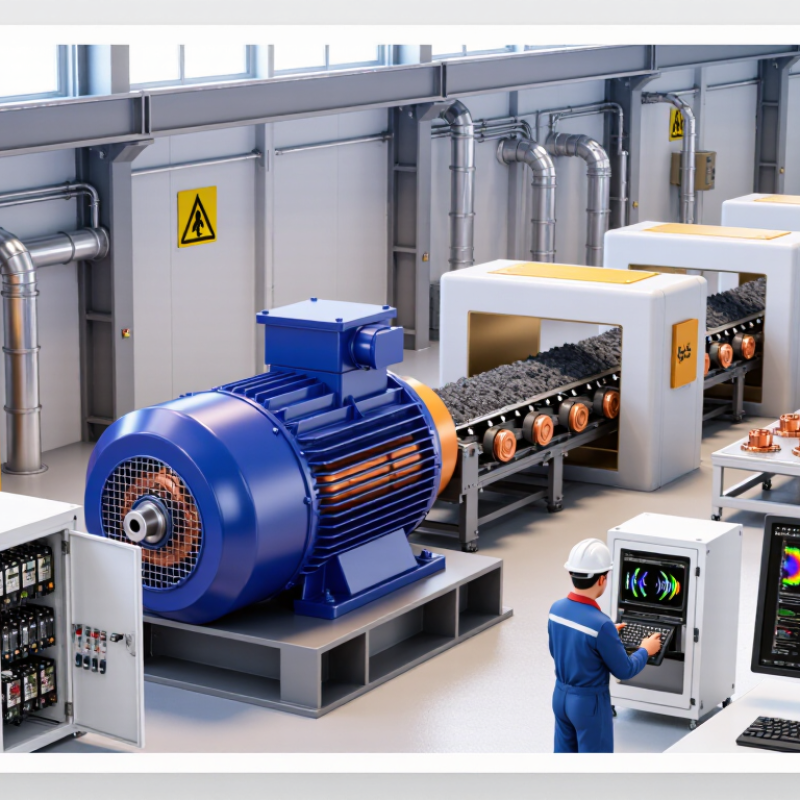
China Best Heavy Duty Motor Manufacturer?
Heavy-duty motors are built for continuous operation, high starting loads, and difficult environments. The term describes performance demands, not simply a larger frame size. Typical applications include mining conveyors, steel mills, water pumps, compressors, crushers, and offshore equipment. These machines may run for thousands of hours yearly. Heat, dust, vibration, moisture, and frequent starts can expose weak designs quickly.
Core specifications should match the actual load profile. Engineers normally check rated power, torque, voltage, frequency, speed, duty cycle, insulation class, cooling method, and enclosure protection. IEC 60034-30-1 defines motor efficiency classes, including IE3 and IE4. The U.S. Department of Energy reports that motor systems use about 70% of industrial electricity in the United States. Small efficiency gains can therefore reduce substantial operating costs. The International Energy Agency also estimates that electric motors consume roughly 46% of global electricity.
A reliable selection process needs more than a catalog rating. Service factor, bearing life, shaft strength, starting current, and vibration limits deserve attention. IP ratings matter in dusty or wet facilities. Variable-frequency drive operation may require reinforced insulation and independent cooling. Field assessments often find that oversized motors operate inefficiently under light loads. That is an imperfect choice, although it remains common. Manufacturer evaluation should include documented testing, traceable materials, thermal performance, and after-sales technical support. The “best” heavy-duty motor depends on verified duty conditions, not marketing language.
China’s heavy-duty motor industry is not a single market. It is a layered manufacturing network. Large integrated plants produce motors, cast housings, shafts, and control components. Specialized factories focus on high-voltage units, water-cooled motors, or custom low-speed drives. Smaller workshops support machining, winding, balancing, and repair services. This structure supports flexible pricing and short production cycles. Yet quality varies.
When evaluating a heavy-duty motor manufacturer, buyers should inspect more than a polished website. Request winding records, rotor-balance reports, insulation-test results, and traceable material certificates. On the production floor, look for clean winding areas, calibrated instruments, and controlled bearing installation. Ask how the supplier manages heat, dust, vibration, and continuous-load conditions. An experienced engineering team should explain efficiency, torque, cooling, enclosure protection, and maintenance intervals clearly. Numbers matter. Field fit matters more.
Export-oriented manufacturers often work with distributors, project contractors, and direct industrial buyers. Distributors can improve local service, while direct purchasing may support clearer technical communication. However, the lowest quotation is rarely the complete cost. Spare bearings, commissioning support, transport protection, and response time can change the final result. Some suppliers provide impressive test data but weak after-sales documentation. That gap deserves attention. A practical selection process combines factory evidence, independent testing, sample evaluation, and contract-level performance requirements. A missed detail in voltage, mounting, or duty cycle can become an expensive lesson.
China Best Heavy Duty Motor Manufacturer?
Selecting a Chinese heavy-duty motor manufacturer requires more than comparing prices. Examine its years of production experience, engineering staff, and completed projects. Ask for load records from applications similar to yours. A polished brochure is not evidence. Request factory audit access, test reports, and traceable production data.
Check whether the manufacturer designs motors for continuous, intermittent, or harsh-duty operation. Review insulation systems, bearing grades, cooling methods, enclosure protection, and overload capacity. Copper quality matters. So does rotor balance. Ask how each motor is tested for temperature rise, vibration, noise, efficiency, and starting current. Sample testing can reveal problems hidden by general certificates. However, one sample cannot represent every production batch.
Reliability also depends on quality control behind the final assembly line. Confirm incoming material inspections, winding checks, dimensional controls, and serial-number traceability. Clarify spare-part availability, warranty handling, delivery schedules, and technical support in your region. Experienced engineers should explain failures without vague promises. I once saw a motor pass a basic running test but fail after repeated overload cycles. The test plan was too simple. That mistake changed the evaluation process. A dependable supplier should welcome difficult questions and provide measurable answers, even when its process still needs improvement.
Procurement evaluation framework based on commonly used industrial motor requirements, including IEC compliance, efficiency, durability, testing, and after-sales capability.
The scores represent a practical benchmark out of 10 for supplier assessment rather than data from any individual company. Priority should be given to verified IEC 60034 compliance, appropriate IE efficiency class, suitable IP protection, overload capacity, documented factory testing, traceability, and dependable technical support.
China Best Heavy Duty Motor Manufacturer?
Leading Manufacturer Capabilities, Certifications, and Quality Standards
Heavy-duty motor manufacturing is not only about frame size or rated torque. Capability begins with repeatable engineering. An experienced plant should document electromagnetic design, rotor balancing, thermal testing, and load validation. According to the International Energy Agency’s Energy Efficiency 2023 analysis, motor-driven systems consume roughly half of global electricity. That scale makes small efficiency gains commercially important. Buyers should request test curves, efficiency maps, bearing specifications, and traceable material records.
Certification turns claims into checkable evidence. ISO 9001 supports controlled processes, while ISO 14001 addresses environmental management. For rotating electrical machines, IEC 60034 defines requirements for performance, testing, and efficiency classification. IEC 60034-30-1 is especially relevant when comparing efficiency classes across suppliers. An independent laboratory report is stronger than a sales sheet. Look for calibrated instruments, defined acceptance limits, and serial-number traceability. These details reveal whether quality survives beyond a sample unit.
Field reliability depends on choices often hidden during procurement. Insulation systems must match voltage, humidity, altitude, and starting frequency. Heavy housings help, but they cannot correct poor cooling or misalignment. Service records, failure analysis, and spare-parts planning show practical experience. Still, no factory is perfect. A supplier should disclose limitations, test uncertainty, and corrective actions without polishing every result. That honesty may feel less impressive, yet it is more useful for long duty cycles. Before approval, audit the production line and witness a complete performance test.
China Best Heavy Duty Motor Manufacturer?
When selecting a heavy-duty motor, match its rated power to the actual load, not a hopeful estimate. Check starting torque, duty cycle, speed, voltage, enclosure rating, and operating temperature. A motor for a dusty workshop needs stronger protection than one in a clean room. Ask the manufacturer for efficiency data, dimensional drawings, test records, spare-part availability, and clear warranty terms. A low purchase price can become expensive after repeated downtime. Measure twice.
Installation strongly affects service life. Align the motor and driven equipment carefully, then verify coupling clearance with suitable tools. Tighten foundation bolts evenly, because soft feet can create harmful vibration. Confirm cable size, grounding, overload protection, and rotation direction before applying full load. In field installations, I have seen excellent motors fail early because alignment was treated as a quick task. Do not improvise.
Maintenance should follow measured conditions and documented intervals. Inspect bearings, terminals, cooling passages, seals, and mounting bolts during scheduled checks. Record vibration, temperature, current, and unusual noise; small changes often reveal larger problems. Keep the motor dry and clean, especially near washdown areas. Lubricate only with the specified grease and quantity. More grease is not better. Long-term performance also depends on balanced loading and stable power quality. Review operating data every few months and adjust the maintenance plan when conditions change. It is not perfect. A missed inspection can still happen, so use simple checklists and assign responsibility clearly.
| Evaluation Dimension | Recommended Specification or Range | What to Check When Selecting a Manufacturer | Installation and Maintenance Considerations | Long-Term Performance Indicator |
|---|---|---|---|---|
| Motor Duty and Load Profile | Continuous-duty applications generally use S1 duty; intermittent or frequently cycling loads require a duty rating matched to the actual operating cycle. | Confirm rated torque, overload capability, acceleration requirements, start frequency, load inertia, and whether the motor is suitable for constant-torque or variable-torque service. | Avoid continuous operation above the rated load. Record starting current and verify that the driven equipment does not impose repeated shock loads. | Stable temperature, current, vibration, and speed under the normal load cycle indicate that the motor is correctly sized. |
| Rated Power and Speed | Select rated power with a practical engineering margin, commonly about 10% above calculated continuous demand, unless the system design specifies otherwise. | Check rated output, base speed, torque curve, efficiency at the expected operating point, and compatibility with the gearbox or driven machine. | Do not compensate for an undersized motor by increasing overload settings. Verify alignment and coupling ratings before commissioning. | The motor should operate near its intended efficiency range without persistent overload trips or excessive temperature rise. |
| Voltage, Frequency, and Phase | Common industrial systems use three-phase AC power at 50 or 60 Hz; the exact voltage must match the local electrical supply and nameplate. | Verify voltage tolerance, frequency range, phase sequence, terminal configuration, and conformity with the installation region’s electrical requirements. | Measure supply voltage between phases before startup. Correct phase rotation and tighten terminals to the specified torque. | Balanced phase voltage and current reduce heating, torque pulsation, and premature winding deterioration. |
| Efficiency and Energy Performance | For industrial motors, select the highest efficiency class that is technically and economically suitable for the expected annual operating hours. | Request verified efficiency data at 50%, 75%, and 100% load, together with the applicable test method and efficiency classification. | Keep cooling passages clean and avoid oversized motors running continuously at very light load, where efficiency and power factor may be reduced. | Lower input power at the same mechanical output and stable operating temperature support reduced lifecycle cost. |
| Enclosure and Environmental Protection | Select an enclosure suitable for the site, such as open ventilated, totally enclosed fan cooled, or a higher protection level for dust and water exposure. | Confirm ingress-protection rating, ambient temperature range, altitude correction, corrosion protection, drainage, and hazardous-area certification where required. | Maintain clearance around the fan and air inlet. Protect the motor from direct water jets, conductive dust, chemicals, and blocked ventilation. | Minimal corrosion, clean cooling surfaces, and consistent insulation resistance indicate that the enclosure matches the environment. |
| Insulation and Inverter Compatibility | For variable-frequency-drive operation, use insulation and bearings designed to withstand repetitive voltage pulses and common-mode currents. | Check permissible switching frequency, cable-length limits, dv/dt capability, winding insulation system, shaft-grounding provisions, and minimum operating speed. | Follow the drive manufacturer’s cable, grounding, shielding, and output-filter instructions. Do not bypass thermal protection. | No recurring bearing fluting, insulation alarms, nuisance trips, or high-frequency noise during variable-speed operation. |
| Mechanical Installation | Use a rigid, level mounting base capable of resisting operating torque and vibration; shaft and coupling dimensions must match the driven equipment. | Evaluate housing rigidity, mounting tolerances, shaft runout, bearing arrangement, lifting points, and availability of dimensional drawings. | Check soft foot, shaft alignment, coupling balance, belt tension, and foundation bolts before startup. Never hammer directly on the shaft or housing. | Low vibration and stable bearing temperature after alignment are strong indicators of sound mechanical installation. |
| Bearings and Lubrication | Bearing type, grease grade, relubrication quantity, and interval must be selected according to speed, load, temperature, and mounting orientation. | Request bearing details, lubrication instructions, replacement procedures, and availability of equivalent maintenance parts. | Use only the specified lubricant and quantity. Over-lubrication can raise bearing temperature and damage seals; under-lubrication accelerates wear. | Increasing noise, temperature, or vibration may indicate lubrication problems, misalignment, contamination, or bearing fatigue. |
| Protection and Control | Use short-circuit protection, overload protection, phase-loss or phase-imbalance protection, and temperature monitoring appropriate to the system risk. | Confirm protection settings, sensor compatibility, emergency-stop logic, starting method, and coordination with upstream and downstream equipment. | Set overload protection from measured motor data and application requirements, not by guesswork. Test alarms and trips during commissioning. | A properly coordinated protection system prevents avoidable winding damage and provides useful fault history. |
| Commissioning Tests | Complete no-load and loaded checks after installation, following applicable electrical safety procedures and project specifications. | Require documented test records for insulation resistance, winding resistance, phase balance, rotation, vibration, current, temperature, and load performance. | Inspect cables, grounding, guards, fasteners, and cooling airflow before energizing. Stop immediately if abnormal noise, odor, or vibration occurs. | Baseline readings make future condition monitoring and fault diagnosis more reliable. |
| Routine Maintenance | Inspection frequency should be based on operating hours, criticality, environment, vibration history, and manufacturer instructions rather than a universal interval. | Assess the quality of maintenance manuals, spare-parts support, remote technical assistance, and repair documentation. | Periodically inspect terminals, cooling passages, seals, bearings, vibration, noise, current, and insulation resistance while following lockout/tagout procedures. | Trend data over time; gradual changes are often more useful than one isolated measurement. |
| Serviceability and Spare Parts | Prefer standardized frame dimensions, bearings, seals, terminal components, and readily available replacement parts where downtime is costly. | Check spare-part lead times, repair capabilities, rotor balancing support, warranty terms, technical drawings, and service response procedures. | Keep critical bearings, seals, fans, terminal components, and sensors in controlled storage when the application is production-critical. | Shorter repair time and consistent replacement quality improve equipment availability over the motor’s service life. |
| Standards and Documentation | Use motors tested and documented according to the standards and regulatory requirements applicable to the installation market and application. | Request nameplate data, dimensional drawings, performance curves, test certificates, conformity documents, wiring diagrams, manuals, and traceable serial records. | Store all commissioning and maintenance records with the asset. Changes to wiring, settings, or mechanical configuration should be documented. | Complete documentation supports safe operation, repeatable maintenance, audits, warranty claims, and future replacement decisions. |
Note: The ranges and recommendations shown are general engineering guidance. Final motor selection should be verified against the actual load profile, electrical system, environmental conditions, applicable standards, and installation instructions.
It includes integrated plants, specialized factories, machining shops, winding teams, and repair providers. Quality can vary widely.
Request winding records, rotor-balance reports, insulation-test results, and traceable material certificates. Records reveal process control.
Check clean winding areas, calibrated instruments, and controlled bearing installation. Observe how workers manage dust, heat, and vibration.
Not always. Spare bearings, transport protection, commissioning, and response time may increase the final cost.
Confirm voltage, mounting, torque, cooling, enclosure protection, duty cycle, and maintenance intervals. One mismatch can create costly downtime.
Request test curves, efficiency maps, bearing details, and independent laboratory reports. Sales sheets alone are insufficient.
Insulation must suit voltage, humidity, altitude, and starting frequency. Heavy housings cannot fix poor cooling or misalignment.
Look for serial-number traceability, calibrated instruments, failure analysis, spare-parts planning, and complete performance testing. No factory is perfect.
Yes. Witness a full performance test and review acceptance limits. A polished website proves little.
Ask for test uncertainty, known limitations, and corrective actions. Honest answers may feel less impressive, but they support better decisions.
Choosing the best Heavy Duty Motor manufacturer in China requires more than comparing prices. Heavy-duty motors are designed for demanding environments such as mining, manufacturing, energy, transportation, and large-scale processing, where high torque, continuous operation, durability, and stable performance are essential. A reliable evaluation should consider motor power range, efficiency, insulation class, protection rating, cooling method, load capacity, operating conditions, and customization options. Understanding China’s manufacturing structure also helps buyers distinguish between experienced producers, specialized suppliers, and trading companies.
The strongest manufacturers typically demonstrate consistent production capabilities, strict quality control, complete testing procedures, and internationally recognized certifications. Buyers should also assess technical support, delivery reliability, spare-parts availability, installation guidance, maintenance services, and long-term operating costs. Proper motor selection must match the application’s load, speed, voltage, environment, and duty cycle. With suitable installation, routine inspection, timely lubrication, temperature monitoring, and preventive maintenance, a high-quality Heavy Duty Motor can provide dependable service, reduce downtime, improve energy efficiency, and deliver stronger value throughout its operating life.
