 RACB Motor
RACB Motor
RACB Motor
China Top 10 Three Phase Motor Manufacturers
China’s three-phase motor industry supports factories, water systems, compressors, conveyors, and agricultural equipment worldwide. Yet choosing a reliable supplier requires more than comparing catalog prices. Performance depends on efficiency class, insulation quality, bearing design, heat management, and production consistency.
Austin Hughes, a respected motor-drive author, describes the induction motor as “the workhorse of industry.” His observation remains relevant today. A dependable Three Phase Motor should start smoothly, operate quietly, and withstand long hours under changing loads. Buyers should examine test reports, ISO certifications, warranty terms, delivery records, and independent customer feedback. Factory visits can also reveal practical details, such as winding cleanliness, rotor balancing, and final inspection procedures.
This guide reviews China’s top ten Three Phase Motor manufacturers through those measurable factors. It considers product range, engineering capability, export experience, customization, energy efficiency, and after-sales support. Some companies focus on compact motors, while others serve heavy industrial applications. Not every supplier suits every project. That matters.
The ranking is not absolute. Market data changes, and published specifications may not show real operating conditions. A motor rated for high efficiency may still perform poorly when selected with an unsuitable drive or incorrect load calculation. This article therefore encourages technical verification before purchase. Compare test conditions carefully. Ask specific questions. The best manufacturer is not always the largest one, but the one that consistently matches the motor to the application. Mistakes happen. Careful review reduces them.
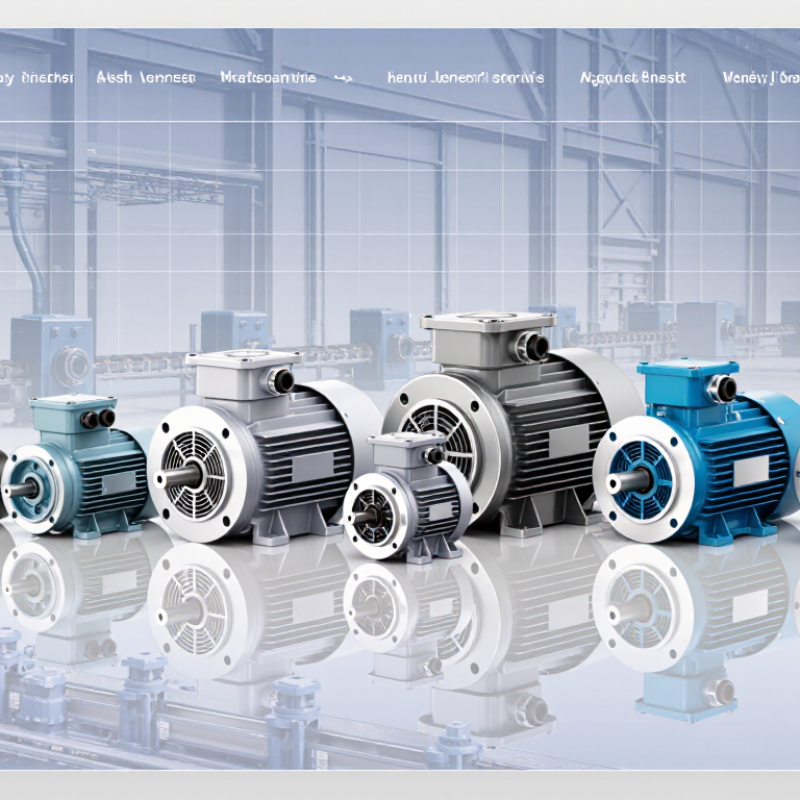
Three-phase motors convert electrical energy into continuous mechanical rotation for industrial equipment. They use three alternating currents, separated by 120 electrical degrees. This arrangement produces a steadier rotating magnetic field than single-phase power. The result is smoother torque, better efficiency, and reliable operation under heavy loads.
In modern factories, these motors drive pumps, compressors, conveyors, fans, machine tools, and production lines. A 30 kW motor may run for thousands of hours each year. Small losses then become significant energy costs. During equipment inspections, technicians often check vibration, bearing temperature, insulation resistance, and current balance. Uneven current can indicate poor connections, winding faults, or supply problems. Maintenance records matter.
China’s leading three-phase motor manufacturers are often evaluated through efficiency data, thermal performance, quality control, and after-sales support. However, catalog figures do not tell the whole story. Installation conditions can change performance considerably. Dust, humidity, frequent starts, and unstable voltage all affect service life. In my experience, correct sizing prevents more failures than impressive nameplate ratings. A motor running far below its rated load may waste energy. Oversizing is not automatically safer. Engineers should verify load torque, starting requirements, duty cycle, and local electrical standards before selection. Testing is essential, though test conditions may not perfectly represent a busy factory floor.
| Reference No. | Three-Phase Motor Category | Typical Rated Power | Common Voltage | Operating Frequency | Typical Pole Count | Efficiency Class | Protection Rating | Duty Type | Typical Industrial Role | Relevant Standards |
|---|---|---|---|---|---|---|---|---|---|---|
| 01 | General-Purpose Squirrel-Cage Motor | 0.75–315 kW | 380–415 V | 50 Hz | 2 or 4 poles | IE3 | IP55 | S1 continuous duty | Fans, pumps, conveyors, machine tools, and standard factory equipment | IEC 60034; IEC 60072; IEC 60034-30-1 |
| 02 | High-Efficiency Industrial Motor | 7.5–630 kW | 380–690 V | 50 or 60 Hz | 2, 4, 6, or 8 poles | IE4 | IP55 or IP66 | S1 continuous duty | Energy-intensive production lines requiring reduced operating losses | IEC 60034-1; IEC 60034-30-1; IEC 60034-5 |
| 03 | Variable-Frequency Drive Motor | 0.75–500 kW | 380–690 V | 5–100 Hz, drive dependent | 2, 4, or 6 poles | IE3 / IE4 | IP55 or IP66 | S1 or intermittent duty | Speed-controlled pumps, compressors, conveyors, mixers, and process systems | IEC 60034-1; IEC 60034-17; IEC 60034-25 |
| 04 | Explosion-Protected Motor | 0.12–500 kW | 380–690 V | 50 or 60 Hz | 2, 4, 6, or 8 poles | IE2 / IE3 | IP55 or higher | S1 continuous duty | Petrochemical plants, gas handling, solvent processing, and hazardous-area equipment | IEC 60079-0; IEC 60079-1; IEC 60034-1 |
| 05 | Brake Motor | 0.12–45 kW | 380–415 V | 50 Hz | 2 or 4 poles | IE2 / IE3 | IP54 or IP55 | S1 or S4 duty | Hoists, lifting systems, cranes, packaging machinery, and rapid-stop equipment | IEC 60034-1; IEC 60034-5; IEC 60072 |
| 06 | Low-Voltage Motor | 0.12–1,000 kW | 220–690 V | 50 or 60 Hz | 2, 4, 6, or 8 poles | IE3 / IE4 | IP55 or IP66 | S1 continuous duty | Manufacturing plants, utility systems, HVAC installations, and water treatment | IEC 60034-1; IEC 60034-30-1; IEC 60072 |
| 07 | Medium-Voltage Motor | 200–10,000 kW | 3.3, 6.0, 6.6, or 10 kV | 50 or 60 Hz | 2, 4, 6, 8, or more poles | IE3 / IE4 | IP54 or IP55 | S1 continuous duty | Large pumps, compressors, fans, mills, conveyors, and heavy process machinery | IEC 60034-1; IEC 60034-5; IEC 60034-30-1 |
| 08 | Water-Resistant Motor | 0.75–315 kW | 380–690 V | 50 or 60 Hz | 2, 4, or 6 poles | IE3 | IP66 or IP67 | S1 continuous duty | Water treatment, outdoor pumping, washdown areas, and damp industrial environments | IEC 60034-5; IEC 60034-1 |
| 09 | Crane and Hoist Motor | 3–250 kW | 380–690 V | 50 or 60 Hz | 4, 6, or 8 poles | IE2 / IE3 | IP55 | S3, S4, or S5 intermittent duty | Bridge cranes, gantry cranes, winches, hoists, and material-handling systems | IEC 60034-1; IEC 60034-5; IEC 60204-32 |
| 10 | Special-Environment Motor | 0.75–500 kW | 380–690 V | 50 or 60 Hz | 2, 4, 6, or 8 poles | IE3 / IE4 | IP56–IP66 | S1 continuous duty | Steel mills, cement plants, chemical facilities, mines, and high-dust environments | IEC 60034-1; IEC 60034-5; application-specific safety standards |
Some focus on efficient low-voltage motors for pumps and fans. Others serve conveyors, cranes, irrigation, mining, or heavy industry. Small differences matter.
Start with the machine load, not the catalogue. Check output, duty cycle, voltage, frequency, temperature, altitude, and starting method.
No. An efficient motor can still waste energy when oversized or poorly controlled. Request efficiency data at 50%, 75%, and 100% load.
Request complete test reports, efficiency curves, protection ratings, and application references. Certificate images alone are weak evidence. Documents matter.
Inspect bearings, terminal boxes, cooling fans, shaft seals, winding materials, and rotor balancing. Check vibration and noise data, too.
A crane motor needs high starting torque. An irrigation motor needs weather resistance. A compressor or marine auxiliary may require custom design.
Confirm production records, serial-number traceability, packaging quality, spare parts, warranty response, and delivery history. Ask for two comparable customer references.
Yes, especially for unfamiliar suppliers. Polished documents can hide poor field performance. A pilot order reveals noise, heating, vibration, and fit.
Motor systems consume a large share of industrial electricity. A 75-kilowatt motor running six days weekly can make small efficiency gaps expensive.
They compare purchase prices while ignoring system controls and operating hours. That approach feels simple, but it can be misleading.
This article presents a practical overview of China’s top 10 Three Phase Motor manufacturers and explains why these motors are essential to modern industry. Three-phase motors provide stable power, efficient operation, strong starting performance, and reliable continuous service, making them suitable for manufacturing equipment, pumps, compressors, fans, conveyors, agricultural systems, and infrastructure projects. The discussion also introduces key criteria for evaluating suppliers, including motor efficiency, rated power, materials, production capability, quality control, certifications, customization options, delivery reliability, technical support, and after-sales service.
In addition, the article compares the product strengths and typical industry applications of ten leading manufacturer categories without focusing on brand names. It concludes with a practical guide to selecting the right Chinese supplier by matching motor specifications with operating conditions, installation requirements, budget, expected service life, and maintenance needs. Careful comparison of technical documents, testing standards, communication quality, and long-term support can help buyers achieve dependable performance and better overall value.
