RACB Motor
Choosing an Industrial Gear Motor in 2026 requires more than comparing catalog prices. The correct unit must match torque, speed, duty cycle, load pattern, and installation space. A motor that performs well on a test bench may struggle beside a hot furnace or under repeated starts. Real operating conditions matter.
This guide examines how engineers can evaluate gear motors using measurable, practical criteria. It considers motor efficiency, gearbox ratio, thermal capacity, protection ratings, lubrication, noise, braking, and control compatibility. It also explains how connected monitoring can reveal rising vibration or temperature before a failure stops production. Supplier documentation should confirm rated torque, service factor, operating limits, and test methods. Trust the data.
Experience often exposes details that specifications overlook. A conveyor may need higher starting torque when material freezes overnight. A packaging machine may require precise positioning rather than maximum power. Dust, washdown water, shock loads, and limited ventilation can change the selection completely. Maintenance access deserves attention too. An efficient motor is not automatically the best choice if technicians cannot inspect it safely.
Some decisions remain imperfect. Energy savings may conflict with purchase cost, and a compact gearbox may offer less thermal margin. Engineers should record these trade-offs instead of hiding them. Comparing verified performance data, lifecycle cost, warranty conditions, and service support creates a more reliable decision. The goal is not simply to buy a powerful motor. It is to choose dependable motion for the actual machine, its environment, and its future workload.
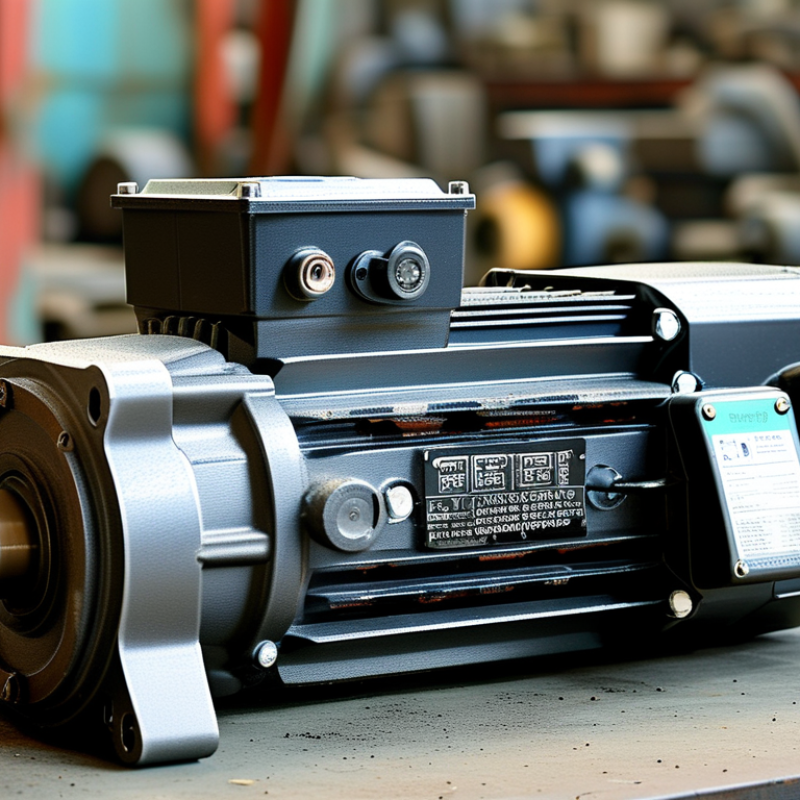
Selecting an industrial gear motor in 2026 starts with measured load data, not a catalog photo. Record the required output torque in newton-metres. Include starting torque, running torque, and short overloads. A conveyor may need 180 N·m while moving, yet demand 320 N·m when fully loaded. That starting spike can expose an undersized gearbox. Measure it if possible. Estimates are useful, but they can be wrong.
Speed must be defined at the shaft driving the machine. State the required output speed in revolutions per minute, then check the acceptable range. A mixer needing 45 rpm may stall below 35 rpm, while a feeder may reject material above 50 rpm. Calculate the reduction ratio from motor speed to output speed. Allow for transmission losses and efficiency changes under load. I have seen projects pass no-load testing and fail once material entered the system. Empty machines are misleading.
Duty cycle describes how hard the motor works over time. Specify operating hours, starts per hour, acceleration time, and rest periods. A motor running continuously at 70% load differs from one making 150 starts per hour. Note ambient temperature, mounting position, braking needs, and shock loads. Select service factors from actual conditions, not habit. More margin is not always better; excess capacity can increase cost and reduce control sensitivity. Recheck the figures after installation, especially if noise, heat, or delayed acceleration appears. Those clues deserve attention.
When choosing an industrial gear motor in 2026, begin with torque and speed, not catalog size. The core equation is P(kW) = T(N·m) × n(rpm) ÷ 9550. Rearrange it as T = 9550P ÷ n. A 7.5 kW motor running at 1,450 rpm produces about 49.4 N·m at its shaft. After reduction to 29 rpm, ideal output torque reaches approximately 2,469 N·m.
Real systems lose energy. With 90% gearbox efficiency, usable torque falls near 2,222 N·m. Allow additional capacity for acceleration, shock loads, frequent starts, and cold lubricant. A conveyor carrying wet material may require more starting torque than its running calculation suggests. Check the duty cycle carefully.
A neat calculation can still mislead. I recheck field measurements, especially when loads change seasonally. The U.S. Department of Energy’s Improving Motor and Drive System Performance sourcebook reports that motor-driven systems can consume over 70% of industrial electricity in many U.S. facilities. The IEA’s Energy Efficiency 2023 report places industry near 37% of global final energy demand. Small efficiency losses matter. Compare rated torque, thermal capacity, service factor, gearbox efficiency, and actual output speed. Do not size only for normal load. That shortcut often fails during startup.
How to Choose an Industrial Gear Motor in 2026?
When selecting an industrial gear motor, start with the motor efficiency class. IEC 60034-30-1 defines IE3 and IE4 efficiency levels for many three-phase motors. IE3 reduces electrical losses during regular operation. IE4 can reduce them further, especially in continuous-duty applications.
Do not judge the gearbox by motor class alone. Check output torque, speed, starting load, duty cycle, and ambient temperature. A lightly loaded IE4 motor may not recover its higher purchase cost quickly. However, a heavily used conveyor can benefit from lower losses every working hour. Confirm the test conditions, rated power, and frequency before comparing figures. Gearbox losses, inverter losses, and poor alignment still affect total system efficiency. A spreadsheet can look convincing, yet real production rarely behaves so neatly.
Tips: Record actual load data for several shifts. Compare IE3 and IE4 using annual operating hours, energy prices, and maintenance needs. Check whether the motor works with the selected variable-frequency drive. Leave enough thermal capacity for frequent starts. Keep the enclosure suitable for dust, moisture, and washdown conditions. One practical mistake is choosing the highest class without checking the real load profile. Efficiency is useful, but correct sizing matters more.
| Selection Dimension | IE3 Motor Class | IE4 Motor Class | Practical Selection Guidance for a Gear Motor |
|---|---|---|---|
| IEC reference | Efficiency class defined under IEC 60034-30-1 for applicable AC motors. | Higher efficiency class defined under IEC 60034-30-1 for applicable AC motors. | Confirm the motor rating, frequency, number of poles, duty, and applicable edition of the standard before comparing products. |
| Typical application | General industrial conveyors, mixers, pumps, fans, machine tools, and moderate-duty systems. | Continuous-duty conveyors, pumps, fans, compressors, elevators, and equipment with high annual operating hours. | Prefer IE4 when the motor runs for long periods near its rated load or when energy consumption is a major operating cost. |
| Reference efficiency at 0.75 kW, 4-pole, 50 Hz | Approximately 80.7% minimum reference efficiency. | Approximately 83.5% minimum reference efficiency. | Use the exact manufacturer test data for the selected motor and operating point; efficiency values vary with rating, poles, voltage, and frequency. |
| Reference efficiency at 1.5 kW, 4-pole, 50 Hz | Approximately 84.2% minimum reference efficiency. | Approximately 85.3% minimum reference efficiency. | The IE4 energy advantage is more valuable when the gear motor operates continuously or is installed in a large fleet. |
| Reference efficiency at 3.0 kW, 4-pole, 50 Hz | Approximately 87.1% minimum reference efficiency. | Approximately 88.0% minimum reference efficiency. | Compare total system efficiency rather than motor efficiency alone, including the gearbox, coupling, brake, and variable-speed drive. |
| Reference efficiency at 7.5 kW, 4-pole, 50 Hz | Approximately 90.1% minimum reference efficiency. | Approximately 91.2% minimum reference efficiency. | A higher-efficiency motor can reduce heat generation and may support longer service intervals when correctly sized and ventilated. |
| Motor energy-loss comparison | At 3.0 kW output and 87.1% efficiency, motor losses are approximately 0.44 kW. | At 3.0 kW output and 88.0% efficiency, motor losses are approximately 0.41 kW. | The approximate loss difference is 0.03 kW before gearbox losses. Annual savings depend on load profile, operating hours, electricity tariff, and drive control. |
| Gearbox efficiency | Depends on gearbox type, ratio, lubrication, load, and speed; the IE class does not rate the gearbox. | Depends on gearbox type, ratio, lubrication, load, and speed; the IE class does not rate the gearbox. | Calculate total efficiency as: motor efficiency × gearbox efficiency × drive efficiency, where applicable. |
| Output speed selection | Suitable when the required output speed is achieved using the selected motor speed and gearbox ratio. | Same speed-selection principle as IE3. | Approximate output speed: motor speed ÷ gearbox ratio. For example, 1,500 rpm ÷ 20 = approximately 75 rpm before slip and actual ratio tolerances. |
| Output torque calculation | Use the motor shaft power and gearbox efficiency to estimate available output torque. | Use the same torque calculation method as IE3. | Approximate torque: T = 9,550 × P × ηg ÷ n. A 3.0 kW motor, 94% gearbox efficiency, and 75 rpm output provide approximately 360 N·m. |
| Variable-speed-drive compatibility | Check insulation system, cooling performance, bearing protection, minimum speed, and drive settings. | Check the same items; high-efficiency motors may have different current, thermal, and control characteristics. | Request drive-compatible data for continuous torque, overload capacity, switching frequency, and operation below base speed. |
| Payback potential | Usually has lower initial cost and may be suitable for low-hour or intermittent operation. | Usually offers greater energy-saving potential but may have a higher purchase price. | Estimate payback using: annual energy savings × electricity price ÷ incremental purchase cost. |
| Sizing rule | Select based on continuous torque, peak torque, duty cycle, starts per hour, ambient conditions, and service factor. | Select based on the same mechanical and thermal requirements. | Do not select a motor only by efficiency class. Avoid both undersizing and excessive oversizing because operation away from rated load can reduce system efficiency. |
| Recommended choice in 2026 | A practical option for standard industrial duty where purchase cost, availability, and moderate operating hours are important. | A strong option for high operating hours, energy-sensitive facilities, and projects targeting lower lifetime operating cost. | Choose the class that produces the lowest verified total cost of ownership while meeting torque, speed, thermal, environmental, and compliance requirements. |
Note: The efficiency figures shown are reference values for three-phase, 4-pole, 50 Hz motors and are included for comparison. Actual IEC 60034-30-1 efficiency limits depend on motor rating, pole count, frequency, voltage, and motor design. IE3 and IE4 classifications apply to the motor, not directly to the gearbox or complete geared-motor assembly.
How to Choose an Industrial Gear Motor in 2026?
A gear motor’s IP rating should match its actual surroundings, not the sales specification alone. The U.S. Department of Energy reports that motor systems consume about 68% of industrial electricity. IEA’s Energy Efficiency 2023 places motor-driven systems near half of global electricity use. Small protection decisions can therefore affect reliability and operating cost.
IEC 60529 defines the first IP digit for solids and the second for liquids. IP65 means dust-tight protection and resistance to water jets. IP66 adds stronger water-jet protection. IP67 supports temporary immersion under specified test conditions. IP69 provides high-temperature, high-pressure water-jet protection. Choose IP66 for washdown areas, but do not assume it handles immersion. That is a common mistake.
Look beyond water. IEC 60529 does not fully cover corrosion, chemical attack, condensation, vibration, or extreme temperatures. I have seen motors pass an IP test, then fail near salty spray because the enclosure finish was unsuitable. Check cable glands, shaft seals, drain plugs, and mounting orientation. A weak entry point defeats a strong enclosure. My imperfect rule is simple: select the environment first, then the rating. Ask for test conditions, not only the IP number. Recheck the choice after installation. Real factories are rarely as clean as the specification sheet.
How to Choose an Industrial Gear Motor in 2026?
Thermal limits should be checked before selecting a gear motor. Measure ambient temperature, duty cycle, start frequency, and mounting position. A unit may survive the rated torque yet overheat during repeated starts. Watch the housing temperature after several hours, not only during a short test. That detail is often missed.
Service factor must reflect real loading. Consider shock loads, peak torque, reversing cycles, and daily operating hours. A conveyor carrying uneven products needs more margin than a steady fan. Do not choose a large service factor blindly. Oversizing can increase cost, starting current, and mechanical stress. The calculation may still need revision when field conditions change.
ISO 281 helps estimate bearing rating life, usually expressed as L10 life. Use the bearing’s dynamic load rating and equivalent dynamic load, then account for speed and load variation. However, ISO 281 does not certify complete gearbox life. Gear tooth strength, lubrication, seals, alignment, and contamination also matter. For example, a calculated 20,000-hour bearing life may not prevent early gear wear. This is where selection work becomes less tidy. Recheck the model against actual vibration, oil temperature, and maintenance records. A conservative design is useful, but unsupported assumptions are not.
Record running torque, starting torque, overloads, output speed, and duty cycle.
A loaded conveyor may require 180 N·m while running and 320 N·m during startup.
State the shaft speed driving the machine, measured in revolutions per minute.
Divide motor speed by required output speed.
Record operating hours, starts per hour, acceleration time, rest periods, and load percentage.
IP65 protects against dust and water jets. IP66 provides stronger water-jet protection.
No. IP ratings do not fully address corrosion, chemicals, condensation, vibration, or extreme temperatures.
Check cable glands, shaft seals, drain plugs, mounting direction, heat, noise, and delayed acceleration.
Choosing the right Industrial Gear Motor in 2026 starts with a clear understanding of the application. Define the required load, output torque, operating speed, starting conditions, and duty cycle before comparing motor and gearbox options. Use the relationship P(kW) = T(N·m) × n(rpm) ÷ 9550 to confirm the power requirement, then allow suitable capacity for peak loads and frequent starts. Efficiency should also be considered, with IE3 or IE4 motor classes helping reduce energy consumption during continuous operation.
The motor must match the working environment as well as the mechanical demand. Select an appropriate IEC 60529 IP rating for exposure to dust, moisture, or washdown conditions, and verify thermal limits under the intended duty cycle. Check the service factor to ensure reliable operation during overloads, while confirming gearbox bearing and gear life according to ISO 281 principles. A complete evaluation of torque, speed, efficiency, protection, temperature, and expected service life will support a safe, durable, and cost-effective selection.
