RACB Motor
A High Efficiency Motor converts more electrical power into useful mechanical work, wasting less energy as heat. In practical terms, that difference appears in a factory’s meter readings, motor-room temperature, and maintenance schedule. A standard motor may feel unusually hot after hours of operation. A more efficient model usually runs cooler under comparable conditions. Small gains can become significant when pumps, fans, compressors, or conveyors operate continuously.
The benefits extend beyond energy savings. Lower heat can reduce insulation stress and support longer service life. Stable operation may also reduce unexpected stoppages, although efficiency alone cannot prevent every failure. That point deserves attention. Incorrect sizing, poor alignment, voltage imbalance, and inadequate ventilation can undermine a motor’s performance. Experienced maintenance teams check these conditions before approving a replacement. They compare load profiles, operating hours, starting requirements, and measured power demand. Nameplate ratings provide useful guidance, but real operating data gives stronger evidence.
Reliable evaluation should follow recognized testing practices and applicable regional standards, such as relevant IEC or NEMA requirements. Buyers should examine efficiency ratings, warranty terms, service support, and total cost of ownership. The cheapest purchase is not always the economical choice. Nor is the highest-rated motor automatically suitable for every application. A professional selection balances efficiency, torque, control compatibility, installation conditions, and expected workload. This article explains what defines a High Efficiency Motor and why its value depends on informed selection, accurate installation, and disciplined maintenance. The technology is compelling, but it is not magic.
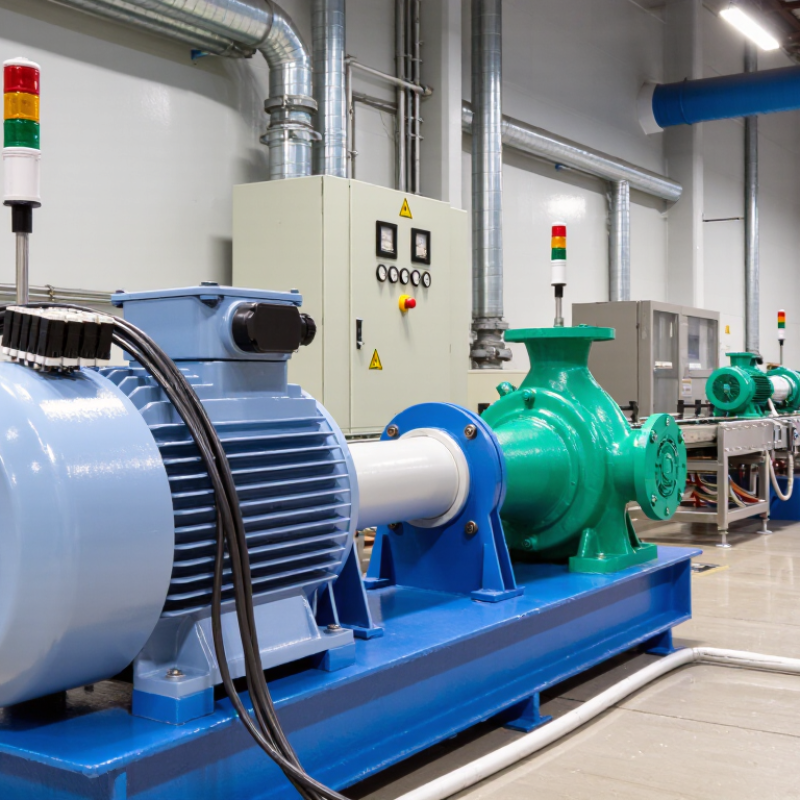
A high-efficiency motor converts more electrical energy into useful mechanical power. It wastes less energy as heat, noise, and friction. In practical terms, a 10-kilowatt motor may deliver similar shaft output while drawing less electricity than a standard model. The difference appears small on paper. It becomes significant after thousands of operating hours.
Efficiency depends on more than the motor’s nameplate. Engineers examine copper losses, iron losses, bearing friction, and cooling performance. A motor rated for high efficiency may perform poorly if it runs far below its designed load. I have seen systems where incorrect sizing erased much of the expected saving. That detail is easy to miss.
Operating conditions matter greatly. Frequent starts, dusty air, poor ventilation, and voltage imbalance can increase heat and shorten service life. Variable-speed applications require careful matching between the motor and its drive. Accurate measurements should include voltage, current, load, power factor, and running temperature. A single reading is not enough. Maintenance records also reveal gradual changes, such as rising current or unusual vibration. Efficiency labels provide useful guidance, but they cannot replace site testing and professional evaluation. Sometimes, the better choice is not the most efficient motor on paper, but the one correctly sized for the real workload.
What Is a High Efficiency Motor and Why Does It Matter?
How High-Efficiency Motors Work
A high-efficiency motor converts electrical energy into mechanical motion with fewer losses. Inside, the stator creates a rotating magnetic field around the rotor. This magnetic interaction produces torque, which turns a shaft connected to equipment such as pumps, fans, or conveyors.
Better motors use carefully shaped magnetic cores and improved electrical conductors. These features reduce heat caused by resistance and magnetic losses. Precision bearings also limit friction during operation. Some designs use permanent magnets, while others rely on induced current in the rotor. Both approaches can work well when matched to the application.
Efficiency changes with operating conditions. A motor may perform impressively at its rated load but waste energy when oversized or lightly loaded. I have seen systems run smoothly while consuming more power than expected because control settings were poorly matched. That detail is easy to miss.
Temperature matters too. Excess heat increases resistance and can shorten insulation life. Proper ventilation, alignment, and regular measurement help preserve performance. A variable-speed drive can reduce energy use when demand changes, but incorrect settings may create new losses. The motor is only one part of the system. Cables, couplings, bearings, and driven equipment also influence real-world efficiency. Field measurements are often more reliable than assumptions from a specification sheet.
High-efficiency motors convert more electrical input into useful mechanical output. The chart compares the minimum nominal efficiencies for 15 kW, four-pole motors across IEC efficiency classes and shows the resulting energy lost for every 100 kWh of mechanical output.
Data basis: IEC 60034-30-1 minimum nominal efficiency values for 15 kW, four-pole motors. Energy loss is calculated as (100 ÷ efficiency) − 100.
A high-efficiency motor converts more electrical input into useful mechanical power. The difference appears as less heat inside the frame. The International Energy Agency estimates that motor-driven systems consume roughly 45% of global electricity. Even a small efficiency gain can therefore reduce operating costs across factories, pumps, fans, and compressors.
Efficiency ratings need careful reading. IEC 60034-30-1 classifies motors from IE1 to IE4, with higher classes indicating lower standardized losses. However, the nameplate rating usually describes performance near full load. Real equipment may run at 40% load for long periods. That changes the result. Check part-load efficiency, power factor, rated speed, and the motor’s duty cycle. A motor with excellent full-load efficiency may perform poorly when oversized.
Operating conditions matter, too. High ambient temperature, blocked cooling passages, voltage imbalance, and frequent starts increase losses. Variable-speed drives can save energy in pump and fan applications, especially when flow demand changes. Yet harmonics and poor drive settings may create additional heating. The U.S. Department of Energy’s motor-system guidance recommends evaluating the entire system, not only the motor. Field measurements help: compare actual current, load, temperature, and running hours against the specification. Ratings are useful. They are not the whole story.
What Is a High Efficiency Motor and Why Does It Matter?
Benefits of Using High-Efficiency Motors
A high-efficiency motor converts more electrical power into useful mechanical output. It loses less energy through heat, friction, and electrical resistance. The International Energy Agency reports that motor systems consume roughly 53% of global electricity. This makes even small efficiency improvements important in factories, buildings, pumps, and ventilation systems.
Lower electricity use is the clearest benefit. A more efficient motor can also produce less heat, which may reduce cooling demand and insulation stress. In daily operation, this can support longer service intervals and steadier equipment performance. The U.S. Department of Energy notes that motor-driven systems represent more than half of industrial electricity consumption. Upgrading one heavily used motor may therefore deliver measurable savings.
The payback is not always quick. A lightly loaded motor may provide limited savings after replacement. Oversizing can erase part of the benefit. I would check load profiles, running hours, voltage quality, and maintenance records before approving an upgrade. Variable-speed control may create greater savings for fans and pumps, but poor settings can waste energy. Field measurements matter more than a promising label. These details are easy to overlook. Data should lead the decision. The IEA and DOE both emphasize system-level performance, not motor efficiency alone. Personally, I would compare lifetime cost, expected downtime, and verified energy readings before installation. A spreadsheet can look perfect, while the production floor behaves differently.
| Data Dimension | Standard or Conventional Motor | High-Efficiency Motor | Practical Significance |
|---|---|---|---|
| Definition | A motor designed to meet the applicable minimum efficiency requirement for its rated power and operating conditions. | A motor engineered to reduce electrical losses and deliver the required mechanical output with less input power. | Higher efficiency means less energy is converted into waste heat during operation. |
| Common efficiency classification | Typically associated with lower efficiency classes, depending on the motor’s rated output, frequency, voltage, and number of poles. | Often identified by international efficiency classes such as IE3, IE4, or IE5, where applicable. | The exact efficiency value must be checked on the motor nameplate or technical data sheet. |
| Typical sources of losses | Winding resistance, magnetic core losses, bearing friction, fan losses, and stray-load losses. | Reduced winding and core losses through improved materials, optimized magnetic design, and improved cooling or construction. | Lower losses generally reduce operating temperature and may support longer insulation life. |
| Illustrative efficiency at rated load | Approximately 88%–92% for many general-purpose motors, depending on size and design. | Approximately 92%–97% for many modern high-efficiency motors, depending on size, speed, and efficiency class. | Efficiency is not constant across the load range; motors are commonly most efficient near their rated operating point. |
| Energy consumption | Requires more electrical input to produce the same shaft output. | Requires less electrical input for the same mechanical output. | The reduction is most meaningful for motors that operate many hours per year. |
| Operating cost | Higher electricity cost when the motor has substantial annual operating hours. | Lower electricity cost because fewer kilowatt-hours are consumed. | Energy savings can offset a higher purchase price over the motor’s service life. |
| Heat generation | More input energy is dissipated as heat. | Less heat is produced for the same shaft output. | Lower heat can reduce thermal stress and the cooling demand in some installations. |
| Environmental impact | Higher electricity use can result in greater indirect greenhouse-gas emissions, depending on the electricity mix. | Lower electricity use can reduce indirect emissions associated with motor operation. | The environmental benefit depends on operating hours and the carbon intensity of the electricity supply. |
| Best application profile | Occasional-use equipment or applications where replacement cost is the primary concern. | Pumps, fans, compressors, conveyors, machine tools, and other equipment operating frequently or continuously. | Annual operating hours, load profile, electricity price, and motor size should guide the selection. |
| Example Input | Assumption | Result or Formula |
|---|---|---|
| Mechanical output | 11.25 kW shaft output | Equal to a 15 kW motor operating at 75% load |
| Annual operating time | 4,000 hours per year | High operating hours increase the value of efficiency improvements |
| Electricity price | $0.12 per kWh | Actual costs vary by location, tariff, and demand charges |
| Motor efficiency of 90% | 11.25 ÷ 0.90 = 12.50 kW input | Approximately 50,000 kWh and $6,000 per year |
| Motor efficiency of 95% | 11.25 ÷ 0.95 = 11.84 kW input | Approximately 47,368 kWh and $5,684 per year |
| Estimated annual difference | 90% versus 95% efficiency | About 2,632 kWh and $316 saved per motor each year |
Note: The numerical comparison is illustrative. Actual motor efficiency depends on rated power, speed, voltage, frequency, load, temperature, maintenance condition, and operating profile. Efficiency classes and minimum requirements may vary by jurisdiction and application.
High-efficiency motors convert more electrical power into useful mechanical output, reducing heat and wasted energy. Their value becomes clearer in applications that run for long hours, such as pumps, fans, compressors, conveyors, and machine tools. A motor operating beside a dusty production line may run continuously, so even small efficiency gains can reduce yearly electricity use. Lower heat can also support longer insulation life and steadier performance.
Selection should begin with the load, not the efficiency label alone. Check rated power, speed, torque, duty cycle, starting conditions, and available voltage. A pump may need stable speed, while a conveyor may require strong starting torque. For variable-speed equipment, confirm that the motor and drive work together across the expected speed range. Poor matching can erase the expected savings.
Environmental details matter. Measure ambient temperature, humidity, dust, mounting position, and cooling airflow. An enclosed motor may suit a dirty workshop, but restricted ventilation can raise its temperature. Efficiency classifications under IEC 60034-30-1 provide useful comparisons, although test conditions may differ from field operation. A slightly oversized motor often appears safe, yet it may operate inefficiently under light loads. That shortcut deserves another look. Maintenance teams should also verify alignment, lubrication, and bearing condition, because a highly efficient motor cannot compensate for mechanical losses. Repair access and replacement availability should influence the final decision.
It converts electrical energy into mechanical motion with fewer losses. The stator creates a rotating magnetic field around the rotor. This interaction produces torque and turns the shaft. Less waste occurs.
Improved magnetic cores and electrical conductors reduce resistance and magnetic losses. Precision bearings reduce friction around the rotating shaft. Lower resistance also means less heat during operation. Small details matter.
They suit equipment operating for long hours. Common examples include pumps, fans, compressors, conveyors, and machine tools. A motor beside a dusty production line may run continuously. Small savings can accumulate over many months.
No. A lightly loaded or oversized motor may provide limited savings. An efficient motor can still waste energy when poorly matched. Check load profiles, running hours, voltage quality, and maintenance records. Labels cannot reveal everything.
Begin with the equipment load, not the efficiency label alone. Check rated power, speed, torque, duty cycle, and starting conditions. Confirm available voltage and expected operating hours. A conveyor may need strong starting torque. A pump may need stable speed.
It can reduce energy use when demand changes. Fans and pumps often benefit from speed adjustment. Incorrect settings may create extra losses or unstable operation. The motor and controller must work together across the speed range. Measure it.
Excess heat increases electrical resistance and may shorten insulation life. Dust, humidity, restricted airflow, and high ambient temperature can raise operating temperature. Proper ventilation and suitable mounting help control heat. A dirty workshop needs careful enclosure and cooling choices. Conditions change.
Measure electrical input, mechanical demand, temperature, speed, and operating hours. Inspect alignment, lubrication, bearings, cables, couplings, and driven equipment. Field readings often reveal losses hidden by specification sheets. I might trust the label too quickly. A spreadsheet can mislead.
A High Efficiency Motor is designed to convert more electrical energy into useful mechanical power while producing less heat and waste. It achieves this through improved magnetic materials, optimized winding designs, better bearings, and precise manufacturing. Efficiency ratings help users compare motor performance, while factors such as load, operating speed, power factor, temperature, maintenance, and duty cycle also influence real-world energy consumption. A motor’s efficiency should therefore be evaluated under the conditions in which it will actually operate.
Using high-efficiency motors can reduce electricity costs, lower operating temperatures, extend equipment service life, and support more sustainable production. They are suitable for applications such as pumps, fans, compressors, conveyors, and industrial machinery, especially where motors run frequently or continuously. When selecting one, users should consider rated power, starting requirements, speed control, installation conditions, available space, maintenance needs, and the total cost of ownership rather than focusing only on the purchase price.
