RACB Motor
A Low Noise Motor can make a noticeable difference in a bedroom appliance, office fan, pump, or precision machine. Yet “quiet” is not a universal specification. A motor that sounds smooth on a test bench may become loud after installation, especially when its frame is poorly mounted or its load changes.
Small details count. Noise can come from several sources: electromagnetic forces, bearings, airflow, vibration, and connected components such as gears. A low decibel figure is useful only when the test conditions are clear. Check how the motor was measured, including its distance, speed, and load. Then compare those conditions with your actual application. A datasheet should support the decision, not make it for you.
No motor is truly silent. That’s worth remembering. The following seven tips explain how to compare noise ratings, match motor size and speed to the task, assess bearing and control options, and consider mounting, cooling, and operating life. They also highlight practical checks, such as listening to a sample under realistic load and reviewing manufacturer documentation. A brief listening test can reveal a problem, but it cannot replace measured data. I would not choose by sound alone; even a careful comparison can miss a resonance that appears only after installation. Use the tips as a purchasing guide, and confirm the final choice in the equipment where the motor will run.
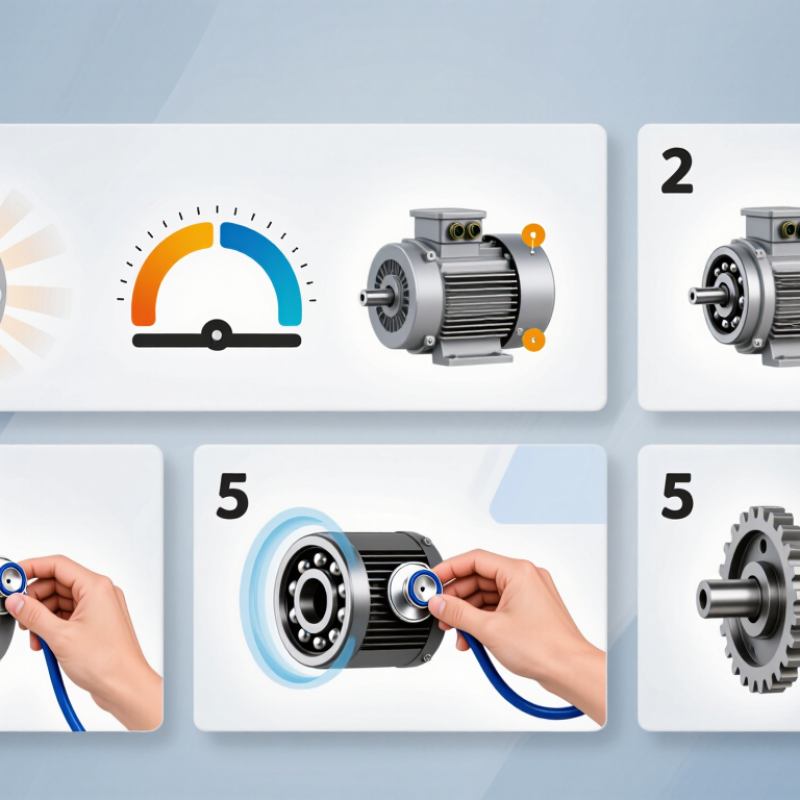
Define the application before comparing noise figures. Record the required speed, starting torque, duty cycle, and hours of operation. A motor turning a small fan continuously has different needs from one driving a loaded conveyor through frequent starts. Note the available space, mounting stiffness, cooling airflow, and nearby reflective surfaces. These details affect both performance and perceived noise. A quiet motor can still sound harsh if its mounting amplifies vibration.
Set measurable limits. Specify the sound level, measurement distance, operating speed, and load; do not compare figures taken under different conditions. Also distinguish sound pressure from sound power ratings. The U.S. Department of Energy’s Improving Motor and Drive System Performance sourcebook reports that motor-driven systems use about 68% of electricity in U.S. manufacturing. That makes duty and load worth documenting, not guessing. For occupied workplaces, NIOSH’s Criteria for a Recommended Standard: Occupational Noise Exposure recommends an 85 dBA, eight-hour exposure limit. This is an exposure recommendation, not a motor noise target. A useful specification includes both the motor’s acoustic test conditions and the surrounding environment. Leave room for uncertainty: enclosure panels, worn bearings, or a loose bracket can change the result after installation. Before ordering, ask how noise was measured and whether the test reflects your actual operating point.
A quiet motor is not always the quietest system. In a small fan, airflow may drown out motor noise; in a tabletop actuator, every vibration can be heard. The U.S. Department of Energy’s Improving Motor and Drive System Performance reports that motor-driven systems use about 54% of electricity in U.S. manufacturing. That figure concerns energy, not sound, but it shows why motor selection deserves careful attention.
Brushless DC motors avoid brush contact, yet electronic commutation can create a high-pitched tone. Induction motors often run smoothly at steady speed, though electromagnetic hum or a variable-frequency drive may add tonal noise. Stepper motors offer precise positioning but can buzz near resonance; microstepping may reduce vibration, not eliminate it. Gearboxes matter, too. A quiet motor paired with noisy gears is still a noisy assembly.
Check sound-pressure data measured under conditions close to your application, and compare dBA figures only when distance, load, and speed match. IEC 60034-9 provides acoustic-noise test methods and limits for rotating electrical machines. Ask suppliers for test conditions, not just a “low-noise” label. I would not trust that label alone. Mounting stiffness, alignment, and soft feet can change what you hear on the bench, sometimes more than expected. Test the complete assembly at its real operating speed before choosing.
Tip 1: Read the conditions behind the number. A motor’s noise rating means little without its measurement distance, speed, load, and mounting setup. Check whether the figure is reported in dBA, and whether testing took place in a quiet room. Small details matter.
Tip 2: Compare like with like. A reading taken one meter away cannot be fairly compared with one taken much closer. Likewise, a lightly loaded motor may sound quieter than the same unit under real operating conditions. Look for test data at your expected speed and load. If those details are missing, ask the supplier rather than guessing.
Tip 3: Listen in your own setup. A rigid workbench, thin panel, or nearby enclosure can amplify vibration and change what you hear. Secure the motor as intended, then test it at several speeds. Pay attention to steady hums, rattles, and changes during startup. A phone meter can help spot differences, but it is not a calibrated test instrument. I would not treat one quick reading as proof; even careful comparisons can miss noise that appears after installation.
Low-noise motor selection starts with the actual load, not the quietest number on a product sheet. Efficiency ratings matter, but compare them at your normal duty cycle and load. A motor may run efficiently near its rated point yet waste energy when oversized or lightly loaded. Check expected run hours, start frequency, and heat buildup; these details affect operating costs and service life. Ask how noise and efficiency figures were measured, since mounting and measurement distance can change results. Small details matter.
Speed control affects both sound and performance. If a fan, pump, or conveyor needs variable output, confirm the motor works with its controller across the required speed range. Lower speed can reduce airflow noise, but poor settings may cause vibration, excess heat, or uneven torque. Listen during startup and at several steady speeds, not only at idle. A smooth hum is useful; a sharp whine deserves investigation.
The operating environment can overturn a good laboratory result. Dust, moisture, nearby walls, and a resonant frame affect cooling and perceived noise. Match the enclosure and cooling method to the site, and leave room for airflow. In a workshop, compare sound where operators actually stand during a normal shift. One measurement is rarely enough. I would revisit the choice after installation, too; real mounts and loads can expose assumptions that seemed reasonable on paper.
Use these approximate sound levels as context when comparing motor noise. For a fair comparison, check sound-pressure measurements taken at the same distance and operating load. Also evaluate efficiency, speed-control range, vibration, mounting, and the motor’s temperature and dust exposure in its intended environment.
Reference levels are approximate; actual sound varies with distance, room acoustics, equipment, and measurement conditions. Decibels use a logarithmic scale.
A low-noise motor should arrive with more than an attractive sound rating. Ask how the rating was measured, including speed, load, distance, and mounting conditions. Compare test results only when those details match. A quiet reading on a rigid bench may not predict performance inside a thin metal housing. Small details matter. Inspect the motor’s casing, shaft, connectors, and mounting points for clean finishes and secure fits. Ask about bearing type, insulation, and protection against dust or moisture where relevant. These details can affect vibration, service life, and sound after installation.
Maintenance needs should fit the way the motor will actually be used. Request a written schedule and clear instructions for checking bearings, cleaning vents, or replacing wear parts. Ask whether common parts are stocked and how quickly they can be supplied. Supplier support matters when a motor becomes noisy unexpectedly. Can the supplier help interpret vibration readings or identify an installation issue? Request technical documents, warranty terms, and a direct support contact before ordering. A clean test bench cannot reproduce every installation, and that limitation deserves attention. Leave room in your selection for real-world testing; even careful specifications can miss a loose bracket or an uneven load.
Compare efficiency at your usual load and duty cycle. Check run hours, start frequency, and heat buildup. Small details matter.
Confirm the motor works across the required speed range. Listen during startup and at several steady speeds. A sharp whine needs investigation.
Only if speed, load, distance, and mounting conditions match your setup. A rigid test bench may not reflect a thin metal housing.
Dust, moisture, nearby walls, and resonant frames can change cooling and perceived sound. Leave room for airflow. Listen where operators stand.
Check the casing, shaft, connectors, and mounting points for secure fits. Bearing type and insulation also affect service life and vibration.
Ask for a written schedule covering bearing checks, vent cleaning, and wear parts. Confirm common parts are available. Keep instructions nearby.
Request technical documents, warranty terms, and a direct support contact. Ask whether someone can help interpret vibration readings.
Yes. Real loads and mounts can reveal a loose bracket or uneven load. I might still miss something on paper.
Choosing the right Low Noise Motor starts with a clear understanding of the application. Define the required torque, speed, duty cycle, and acceptable sound level before comparing motor types. Consider features such as balanced components, vibration isolation, and quiet drive systems, while checking how noise ratings were measured. Test conditions matter, since load, distance, and operating speed can affect reported results.
Also assess efficiency, speed-control options, and the surrounding environment, including temperature, dust, and available space. A motor that performs quietly in one setting may behave differently under another load or installation. Finally, review construction quality, maintenance requirements, spare-part availability, and the level of technical support offered by the supplier. Comparing these factors helps ensure the motor is not only quiet, but also reliable and well suited to long-term operation.
